Bouncing Boulders on The Far Side of the Moon
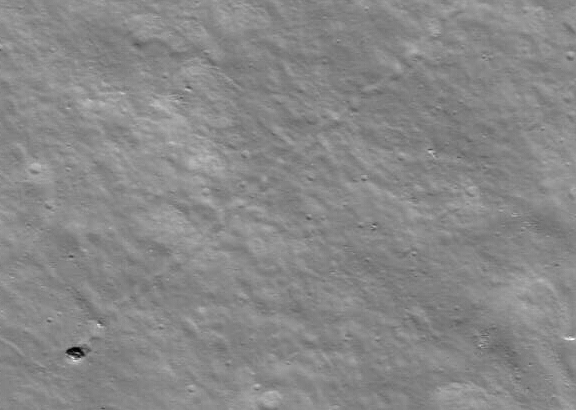
Southwest of Rowland crater on the Moon’s farside, a 15 km diameter unnamed crater exhibits many boulder trails on the crater walls in this Lunar Reconnaissance Orbiter image. The boulders range from 1 m to 15 m across and mark a path downslope to the crater floor from a higher elevation. Some of the trails are smooth and nearly straight while others are curvy or gouge into the surface creating a dashed trail.
Southwest of Rowland crater on the Moon’s farside, a 15 km diameter unnamed crater exhibits many boulder trails on the crater walls in this Lunar Reconnaissance Orbiter image. The boulders range from 1 m to 15 m across and mark a path downslope to the crater floor from a higher elevation. Some of the trails are smooth and nearly straight while others are curvy or gouge into the surface creating a dashed trail.
Boulder trails can be used to identify the original position of boulders on the lunar surface and might help scientists understand more about physical and mechanical properties of the lunar regolith. Image width is 600 m across and the boulder in the lower lefthand corner is 15 m across.
NASA/GSFC/Arizona State University