
NASA Mars Picture of the Day: Ganges Sedimentary Rocks
Mars Global Surveyor Mars Orbiter Camera
MGS MOC Release No. MOC2-736, 24 May 2004
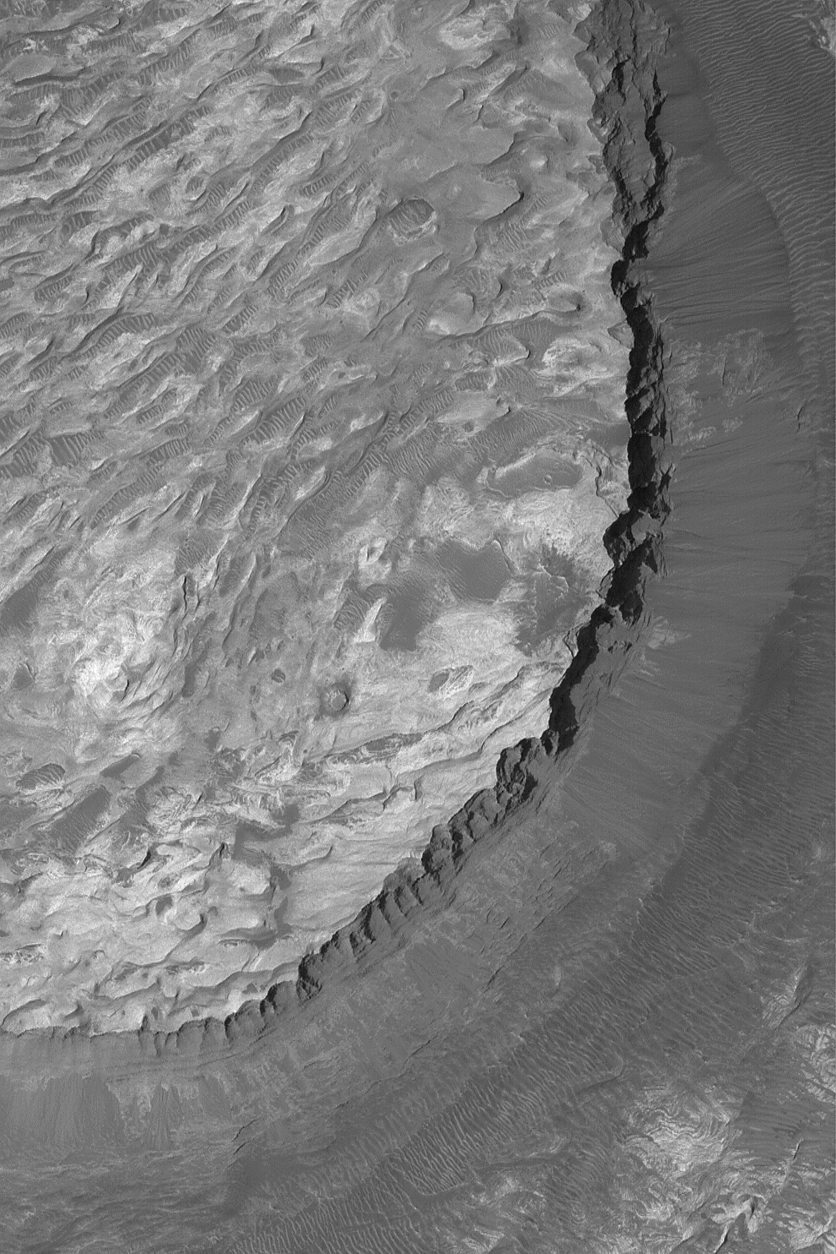 NASA/JPL/Malin Space Science Systems |
Mariner 9 images acquired in 1972 first revealed a large,
light-toned, layered mound in Ganges Chasma, part of the
vast Valles Marineris trough system.
This Mars Global Surveyor (MGS) Mars Orbiter Camera (MOC)
image shows a higher-resolution view of these rocks than
was achieved by Mariner 9 or Viking, and higher than can
be obtained by Mars Odyssey or Mars Express. The image,
with a resolution of about 3.7 meters (12 feet) per pixel,
shows eroded layered rock outcrops in Ganges Chasma. These
rocks record a history of events that occurred either
in Ganges Chasma, or in the rocks brought to the surface
by the opening of Ganges Chasma. Either way, the story they
might tell could be as fascinating and unprecedented as the
story told by sedimentary rocks investigated this year
in Meridiani Planum by the Opportunity Mars Exploration
Rover… no one knows. The image is located
near 7.3°S, 48.8°W, and covers
an area about 3 km (1.9 mi) across. The picture is
is illuminated by sunlight from the upper left.
Malin Space Science Systems and the California Institute of Technology
built the MOC using spare hardware from the Mars Observer mission.
MSSS operates the camera from its facilities in San Diego, California.
The Jet Propulsion Laboratory’s Mars Surveyor Operations Project
operates the Mars Global Surveyor spacecraft with its industrial
partner, Lockheed Martin Astronautics, from facilities in Pasadena,
California and Denver, Colorado.



