
NASA Mars Picture of the Day: Dipping Rock Layers
 NASA/JPL/Malin Space Science Systems |
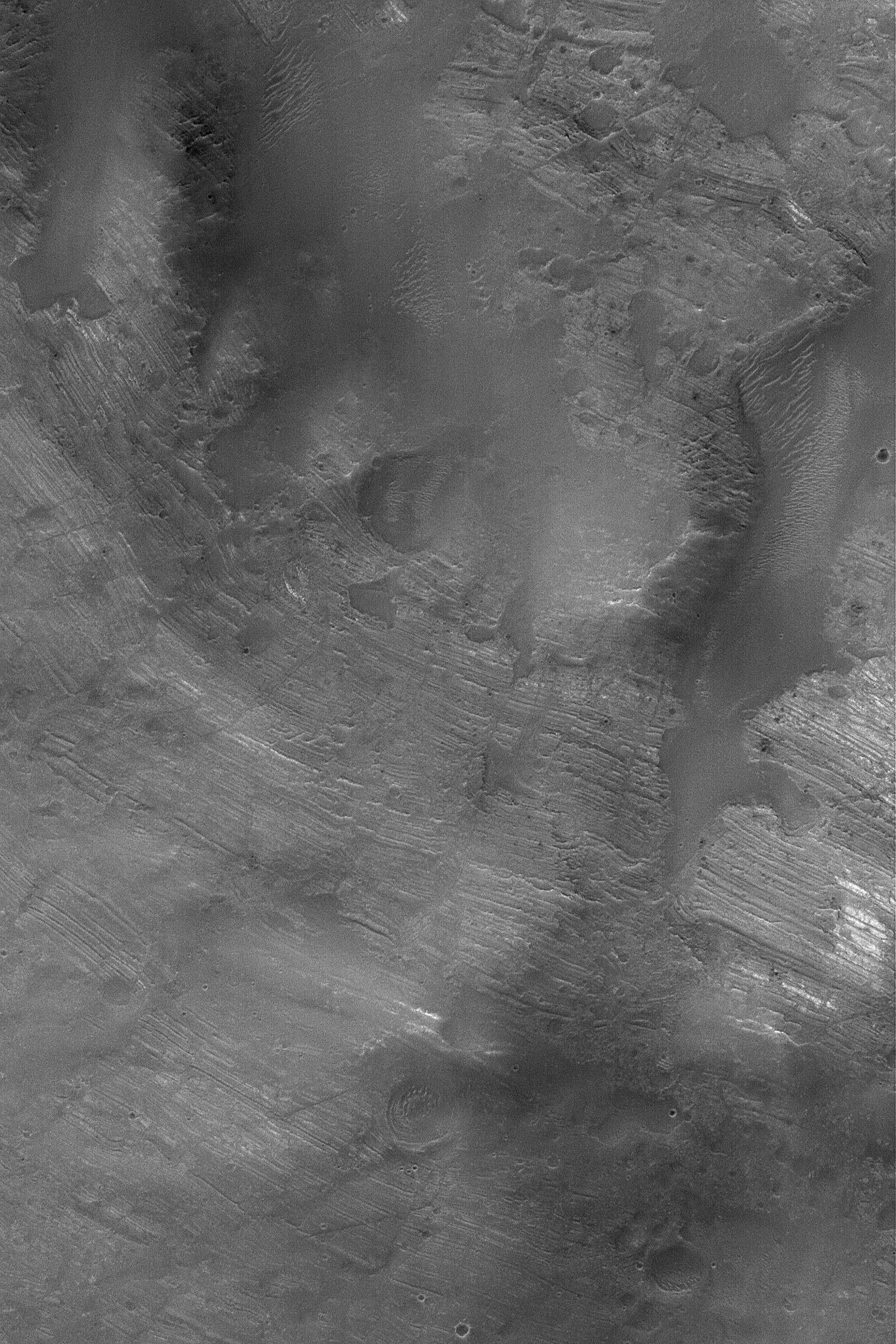
The central peak of Oudemans Crater, located at the edge
of the Labyrinthus Noctis trough system, consists of
steeply-dipping rock layers that were uplifted and tilted
by the meteor impact that formed the crater.
This Mars Global Surveyor (MGS) Mars Orbiter Camera (MOC)
image shows an example. The banded features are layers
of light-toned, possibly sedimentary, rock that were brought
to the surface and uplifted by the impact process that formed
the crater and its central peak. Oudemans Crater’s central
peak serves as a means for probing the nature of rock
that lies beneath the plains cut by the Labyrinthus Noctis
troughs, which are part of the vast Valles Marineris system.
This March 2004 picture is located
near 10.2°S, 92.0°W. The image covers
an area about 3 km (1.9 mi) across and
is illuminated by sunlight from the upper left.
Malin Space Science Systems and the California Institute of Technology
built the MOC using spare hardware from the Mars Observer mission.
MSSS operates the camera from its facilities in San Diego, California.
The Jet Propulsion Laboratory’s Mars Surveyor Operations Project
operates the Mars Global Surveyor spacecraft with its industrial
partner, Lockheed Martin Astronautics, from facilities in Pasadena,
California and Denver, Colorado.



