
NASA ISS On-Orbit Status 3 March 2012
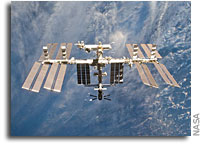
All ISS systems continue to function nominally, except those noted previously or below. Saturday – Crew off duty
After breakfast, FE-2 Ivanishin performed the routine inspection of the SM (Service Module) PSS Caution & Warning panel as part of regular Daily Morning Inspection.
For CDR Burbank & FE-6 Pettit, BCAT-6 (Binary Colloidal Alloy Test-6) camera checks and battery replacements have been removed from their timelines for the time being. [BCAT-6 sample 5 images looked good, but since no phase separation was seen in the sample, it was decided to let it evolve in quiescence over the next week. At that point, the sample will be checked for phase separation.]
As most every Saturday, the six crewmembers joined in conducting the regular weekly three-hour task of thorough cleaning of their home, including COL (Columbus Orbital Laboratory) and Kibo JPM. [“Uborka”, usually done on Saturdays, includes removal of food waste products, cleaning of compartments with vacuum cleaner, damp cleaning of the SM (Service Module) dining table, other frequently touched surfaces and surfaces where trash is collected, as well as the sleep stations with a standard cleaning solution; also, fan screens and grilles are cleaned to avoid temperature rises. Special cleaning is also done every 90 days on the HEPA (high-efficiency particulate air) bacteria filters in the Lab.]
As part of Uborka house cleaning, Anton, Anatoly & Oleg completed regular weekly maintenance inspection & cleaning of fan screens in the FGB (TsV2) plus Group E fan grilles in the SM (VPkhO, FS5, FS6, VP) and the BMP Harmful Contaminants Removal System grille in the SM.
Oleg also did the (currently daily) inspection of the KOB2 cooling loop in the SM, checking a liquid connector on the 4SPN2 panel for coolant leaks. [In case there were any large droplets (10-20 cm3), FE-2 was to report to TsUP-Moscow. After the recovery of KOB2 on 3/1 by replacing a K-90 commutator (switching unit), it was tested successfully and then turned off again. It is considered fully functional. While TsUP-Moscow is currently monitoring the pressure, the crew is checking behind the 4SPN2 panel for leaks. KOB2 will then be activated.]
In further response to the failure of the WPA (Water Processor Assembly, see below), the CDR reconfigured the equipment for transferring water from CWC-I (Contingency Water Container-Iodinated, #1015) to the WPA (Water Processor Assembly) potable water tank using a “tee” hose and a fresh MRF (Microbial Removal Filter) as gas trap. After several hours of transfer, the CWC-I was swapped (with #2018 or 2016). Later, Dan terminated the procedure was terminated, tore the equipment down, using Povidone iodine wipes for cleanup.
Andre Kuipers conducted the regular (~weekly) inspection & maintenance, as required, of the CGBA-4 (Commercial Generic Bioprocessing Apparatus 4) and CGBA-5 payloads in their ERs (EXPRESS Racks) at Lab locations O2 & O1, focusing on cleaning the muffler air intakes with vacuum cleaner or gray tape.
At ~5:30am EST, Andre also turned on the MPC (Multi-Protocol Converter) and started the Ku-band data flow of video recorded during yesterday’s EPO (Education Payload Operations) Optic Sphere Demo to the ground, with POIC (Payload Operations & Integration Center) routing the onboard HRDL (High-Rate Data Link). After about an hour, FE-5 turned MPC routing off again.
Pettit & Kuipers filled out their weekly FFQs (Food Frequency Questionnaires) on the MEC (Medical Equipment Computer), Don’s 9th, Andre’s 7th. [On the FFQs, USOS astronauts keep a personalized log of their nutritional intake over time on special MEC software. Recorded are the amounts consumed during the past week of such food items as beverages, cereals, grains, eggs, breads, snacks, sweets, fruit, beans, soup, vegetables, dairy, fish, meat, chicken, sauces & spreads, and vitamins. The FFQ is performed once a week to estimate nutrient intake from the previous week and to give recommendations to ground specialists that help maintain optimal crew health. Weekly estimation has been verified to be reliable enough that nutrients do not need to be tracked daily.]
Dan & Don had another time slot reserved each for making entries in their electronic Journals on the personal SSC. [Required are three journaling sessions per week.]
FE-1 Shkaplerov conducted the routine daily servicing of the SOZh system (Environment Control & Life Support System, ECLSS) in the SM. [Regular daily SOZh maintenance consists, among else, of checking the ASU toilet facilities, replacement of the KTO & KBO solid waste containers, replacement of EDV-SV waste water and EDV-U urine containers and filling EDV-SV, KOV (for Elektron), EDV-ZV & EDV on RP flow regulator.]
The crew worked out with their regular 2-hr physical exercise protocol on the CEVIS cycle ergometer with vibration isolation (FE-5), TVIS treadmill with vibration isolation & stabilization (FE-1, FE-2, FE-4), ARED advanced resistive exerciser (CDR, FE-1, FE-2, FE-5, FE-6), T2/COLBERT advanced treadmill (CDR, FE-6) and VELO ergometer bike with load trainer (FE-4). [FE-6 is on the special experimental SPRINT protocol which diverts from the regular 2.5 hrs per day exercise regime and introduces special daily sessions, followed by a USND leg muscle self scan in COL. Today’s exercise called for ARED+T2, with CEVIS, ARED+T2, T2, ARED+CEVIS (VO2max), CEVIS following in the next 5 days. No exercise is being timelined for Fridays. If any day is not completed, Don picks up where he left off, i.e., he would be finishing out the week with his last day of exercise on his off day.]
Tasks listed for Shkaplerov, Kononenko & Ivanishin on the Russian discretionary “time permitting” job for today were –
. A ~30-min. run of the GFI-8 “Uragan” (hurricane) earth-imaging program with the NIKON D3X digital camera with Sigma AF 300-800mm telelens, focusing on Aral Sea, Lake Baikal, the Kerch Strait, Taman, Lagankskoe plateau, Krasnaya Polyana, the Volga River Delta Lipetsk, the Caspian Sea, the volcano of Santa Maria, and Allalin Glacier,
. A 10-min. photography session for the DZZ-13 “Seiner” ocean observation program, obtaining HDV (Z1) camcorder footage of color bloom patterns in the waters of the South-Eastern Pacific, then copying the images to the RSK-1 laptop,
. A ~30-min. session for Russia’s EKON Environmental Safety Agency, making observations and taking KPT-3 aerial photography of environmental conditions on Earth using the NIKON D3X camera with the RSK-1 laptop, and
. More preparation & downlinking of reportages (written text, photos, videos) for the Roskosmos website to promote Russia’s manned space program (max. file size 500 Mb).
ATV3 Slip: Launch of ATV3 (Automated Transfer Vehicle 3) will be delayed by ~2 weeks due to the need to re-enter its cargo compartment and secure (fasten down) two Half-CTBs (Cargo Transfer Bags) containing NASA food. With the launch/dock slip, the ISS reboost on 3/12 will not be necessary.
WPA Failure: On 3/1, pressures in the USOS WPA (Water Processor Assembly)’s catalytic reactor began to decrease unexpectedly, leading to WPA failure. Suspected as a likely cause is a leak in the catalytic reactor. Remedial action is expected to involve replacement of several suspect internal seals (the previous reactor failed in March 2010 due to one of these seals). Currently ground teams are working towards an IFM (Inflight Maintenance) on 3/11 (this is still under review). The WPA inability to process water is requiring the crew to perform a variety of water transfer operations such as yesterday and today’s CWC-I transfers to the WPA Water Storage tank through the MRF which allows continued use of PWD (Potable Water Dispenser), OGA (Oxygen Generator Assembly, reduced to 22% production from 40%), and protects the upcoming WHC (Waste & Hygiene Compartment) flush tank fill. Among other steps, later in the week the crew will offload the Lab condensate tank (currently collecting condensate) into a silver biocide CWC for potential RS (Russian Segment) processing. The WPA produces potable (drinkable) water by processing condensate, urine distillate, and OGA by-products. If necessary for joint atmosphere management, the Russian Elektron can be activated earlier than Monday as SOZh is monitoring ppO2 (oxygen partial pressure oxygen).
Weekly Science Update (Expedition Thirty/Thirty-One — Week 24).
2D NANO Template (JAXA): The experiment is continuing in Dewar 4 of MELFI-1. The samples are proceeding by arranging peptides slowly on base plates. The samples will be returned on 28S.
3D SPACE: Complete.
AgCam (Agricultural Camera): No report.
ALTCRISS (Alteino Long Term monitoring of Cosmic Rays on the ISS): Complete.
ALTEA SHIELD (NASA/ASI): No report.
Amine Swingbed (NASA): No report.
AMS-02 (Alpha Magnetic Spectrometer): AMS Payload and Laptop operations are nominal. AMS’s March 2012 high negative beta thermal mitigation plan is in work. AMS Transition Radiation Detector (TRD) Gas Pump temperature tends to get near its lower operating temperature point when the ISS orbit Beta angles go below -45*. By positioning the STRRJ at 45*, the pump is heated by a combination of reflected sunlight and diminished view to deep space by this portion of the AMS payload. As of 2/25, the AMS POCC at CERN has received data on the ground for over 13 Billion particle events.
APEX (Advanced Plant Experiments on Orbit) -Cambium: No report.
APEX-TAGES (Transgenic Arabidopsis Gene Expression System): No report.
Asian Seed 2010 (JAXA): Returned on ULF6.
BCAT-6 (Binary Colloidal Alloy Test 6): Based upon PI feedback, we will determine how to proceed with the sample 5 run. If the sample is determined to not be phase separating, we may not need to continue taking photos until the end of this run (which is in one week). [Colloids are particles as small as a few tens of nanometers (a thousandth of a thousandth of a millimeter) that are suspended in a medium, usually a liquid or a gas. The name “colloid” comes from the Greek word for “glue”, and expresses very important properties of colloids: when small and light enough, particles can be influenced in their behavior by forces of electromagnetic origin, and make them stick together, or repel each other depending on the configuration. Colloids are widely studied in science because the forces between particles can be controlled and tuned and because particles, while being small enough to be influenced by such forces, are big and slow enough to be seen with a relatively simple and inexpensive laboratory instrument like a microscope. This is why colloids are often studied as model for molecular systems (like standard gases or liquids) where molecules, the individual constituents, are much smaller than colloids and cannot be seen with light. As mentioned, forces between colloids can be tuned giving rise to a rich variety of phenomena. One of them is aggregation, which is when particles stick together and tend to form structures. Among the many ways to induce particle aggregation, one allows to do so by controlling the temperature of the solution in which the particles are immersed, thanks to very weak forces called “critical Casimir forces” that have been predicted more than 30 years ago but just partially verified in experiments. The objective of SODI COLLOID is to measure such forces and produce a controlled aggregation of tiny plastic particles. This would allow to shed light on critical Casimir forces and to make a step towards the fabrication of new nanostructured materials with remarkable optical properties for industrial applications.]
BIOLAB (ESA): No report.
BIORHYTHMS (JAXA, Biological Rhythms): No report.
BISE (CSA, Bodies in the Space Environment): No report.
BISPHOSPHONATES: No report.
BXF-Facility (Boiling eXperiment Facility, NASA): No report.
BXF-MABE (Microheater Array Boiling Experiment, NASA): No report.
BXF-NPBX (Pool Boiling Experiment, NASA): No report.
CARD (Long Term Microgravity Model for Investigating Mechanisms of Heart Disease, ESA): “Thanks Andre for completing the CARD kits consolidation. Much appreciated!”
CARDIOCOG-2: Complete.
CB (JAXA Clean Bench): No report.
CBEF-2 (JAXA Cell Biology Experiment Facility)/SPACE SEED: No report.
CCISS (Cardiovascular & Cerebrovascular Control on Return from ISS): No report.
CERISE (JAXA): No report.
CCF (Capillary Channel Flow, NASA): No report.
CFE-2 (Capillary Flow Experiment 2, NASA): “Don and Dan: This week, 2/28 and 3/1, with careful attention to detail, you both were able to find critical wetting/de-wetting events with greater accuracy than previously determined. Don, by rotating the vane with filled perforations in small increments within Quadrant 4, (270o-360o) you discovered conditions that allowed the wetting events and bulk shift to occur separately. This enabled us to see the sequence of these events, which we have not previously observed. You were also able to exploit the bulk shift phenomenon to drain the test chamber, which is a direct application of CFE science. Dan, in addition to finding all four critical wetting/de-wetting events within Quadrant 1, (0o-90o) you were able to capture a real slow de-wetting event, (approx. 35 minutes!) which we have not previously seen. The tests you completed also confirmed that the large bulk shift phenomenon does not occur when the vane perforations are unfilled. Thanks for all the great work.”
CFS-A (Colored Fungi in Space-A, ESA): No report.
CSI-5/CGBA-5 (CGBA Science Insert #5/Commercial Generic Bioprocessing Apparatus 5): No report.
CGBA-2 (Commercial Generic Bioprocessing Apparatus 2): Complete.
CIR (Combustion Integrated Rack), MDCA/Flex: No report.
Commercial (Inc 23&24, JAXA): No report.
Commercial (Inc 25 & 26, JAXA): No report.
CSAC (Chip-Scale Atomic Clock, SPHERES): CSAC experienced an anomaly on ER-2. The payload developer is working with the Express Rack experts and POIC to try to determine the cause of the overcurrent event that occurred on Locker 7. Future trouble-shooting plan still in work.
CSLM-2 (Coarsening in Solid-Liquid Mixtures 2): No report.
CsPins (JAXA): No report.
CubeLab: No report.
CW/CR (Cell Wall/Resist Wall) in EMCS (European Modular Cultivation System): Complete.
DECLIC-ALI (Device for the Study of Critical Liquids & Crystallization-ALICE-like, CNES/NASA): No report.
DomeGene (JAXA): Complete.
DOSIS (Dose Distribution Inside ISS, ESA): No report.
EarthKAM (Earth Knowledge Acquired by Middle School Students): No report.
EDR (European Drawer Rack, ESA): “Andre, thank you for your work to support the KUBIK troubleshooting activities on 2/29! Unfortunately, during the activation of the EDR rack, two anomalies occurred. A too high power current and a no-response error were observed. After power cycling of the EDR rack, the power values were within the expected range but still the same payload communication error did not allow for proper commanding. Therefore, it was decided to abort the KUBIK troubleshooting activities. Andre, thank you also for inspecting the connection between EDR rack and Utility Interface Panel (UIP) and taking photos of the cable connections and of the EDR toggle switch positions. These photos will definitely help for further troubleshooting.”
EKE (Endurance Capacity by Gas Exchange and Heart Rate Kinetics During Physical Training, ESA): No report.
ELITE-S2 (Elaboratore Immagini Televisive – Space 2): Planned.
EMCS (European Modular Cultivation System): No report.
ENose (Electronic Nose): No report.
EPM (European Physiology Module): No report.
EPO (Educational Payload Operations, NASA) (Eye in the Sky; Sleep 2): No report.
EPO (Educational Payload Operations, NASA) (Sesame Street): No report.
EPO (Educational Payload Operations, NASA) (Kids in Micro-G): No report.
EPO (Educational Payload Operations, NASA) (Earth/Moon/Mars Demo): No report.
EPO (Educational Payload Operations, NASA) (Space Sports): No report.
EPO (Educational Payload Operations, NASA) (ISS Orbit): No report.
EPO (Educational Payload Operations, ESA): “Dear Andre, thank you very much for a very successful telebridged contact between yourself and ESA/ESTEC. An auditorium full of students from ISA, ASH and BSN spent the whole day learning about the ISS and radio communication, they even presented science experiments to each other. The tension was tremendous in the run up to the contact and we were all relieved when we heard your call. Sound was 5/5, and the students were very satisfied with your answers (the last three never made it, though). After the contact we had lots of questions about how to become radio amateurs and/or astronauts, so we can only conclude that the mission was accomplished! Thanks again for your continued support to education!”
EPO CONVECTIONS (ESA): “No report.
EPO MISSION X (ESA): No report.
EPO LES-2 (ESA): No report.
EPO GREENHOUSE (ESA): No report.
EPO 3-min Video (JAXA): No report.
EPO J-Astro Report (JAXA): No report.
EPO Dewey’s Forest (JAXA): Closed out on 3/15.
EPO Space Clothes (JAXA): Complete.
EPO Hiten (Dance, JAXA): No report.
EPO Lego Bricks (NASA, JAXA): No report.
EPO Moon Score (JAXA): No report.
EPO Kibo Kids Tour (JAXA): Complete.
EPO Paper Craft (Origami, JAXA): No report.
EPO Poem (JAXA): No report.
EPO-5 SpaceBottle (Message in a Bottle, JAXA): No report.
EPO-6 Spiral Top 2 (JAXA): No report.
EPO-7 Doctor Demo (JAXA): No report.
EPO-7 Green Tea Preparation (JAXA): No report.
EPO-7 Ink Ball (JAXA): No report.
EPO-7 Video (JAXA):
EPO-7 Try Zero-G (JAXA): No report.
EPO-8 Space Sakura (JAXA): No report.
EPO-8 Space Musical Instruments (JAXA): No report.
ERB-2 (Erasmus Recording Binocular, ESA): [ERB-2 aims are to develop narrated video material for various PR & educational products & events, including a 3D interior station view.] “Andre, we think you have already or will soon receive more detailed feedback on ERB-2 footage. Here’s a short summary: So far about 1/3 of the images were received and decoded. The efforts are hugely appreciated! The fly-through clips are of good quality; the work-out in the treadmill in Node3 was a very good and very sharp shot. The shots outside from the cupola are in principle ok, but there would be more technical feedback provided. Great content all-over, thank you!”
ETD (Eye Tracking Device): Completed.
FACET-2 (JAXA): No report.
FERULATE (JAXA): No report.
FIR/LMM/CVB (Fluids Integrated Rack / Light Microscopy Module / Constrained Vapor Bubble): No report.
Fish Scales (JAXA): Completed on FD7/ULF-4 and returned on STS-132.
FOAM STABILITY EPO (ESA): No report.
FOCUS: No report.
FSL (Fluid Science Laboratory, ESA): No report.
FWED (Flywheel Exercise Device, ESA): No report.
GENARA-A (Gravity Regulated Genes in Arabidopsis A/ESA): No report.
GEOFLOW-2 (ESA): After transfer and downlink of the last MVIS file from previous GEOFLOW-II no-rotation science runs (week #22), another 2 no-rotation runs were completed by 2/29. All scientific set-points were acquired. No temperature gradient deviations were observed. At the time of writing, a third no-rotation run is in progress. [Background: Everybody is familiar with liquids. In an average day we get to use, handle or drink water or other liquids. And everybody knows how fluids (that is liquids and gases) behave: when subjected to a net force, may be pressure, a temperature difference or gravity, they can move freely. Scientists have been studying how fluids move for centuries, and managed to write mathematical formulas that can describe and predict such movements. Unfortunately, these equations are extremely complex and only approximate solutions are known. As a result, our quantitative understanding of fluid movement is just partial. This is especially true for natural phenomena where the forces can be enormous and unpredictable, like in oceans or in the atmosphere. Or the interior of the earth, where rocks are exposed to pressures and temperatures so incredibly high that they slowly move and adapt their shape. That is, over hundreds of years rocks flow just like a very viscous liquid. Scientists try to study such flows but cannot observe them directly due to the fact that they take place deep beneath the surface of our planet. The only way is to have computers simulating those movements starting from the equations, but how to check whether computers are correct? This is what Geoflow II is trying to answer on board the International Space Station. Geoflow II is a miniature planet that has some of its essential ingredients: a fluid can freely move inside a spherical container that rotates, has temperature differences and has a simulated gravity directed towards the centre just like in a real planet. By taking pictures of the fluid movements, scientists are able to understand the essential characteristics of the flows and determine whether computer simulations are correct or whether they need to be refined and improved towards a better understanding of the elusive movements that take place inside our planet.]
HAIR (JAXA): No report.
HDTV System (JAXA): No report.
Hicari (JAXA): No report.
Holter ECG (JAXA): No report.
HQPC (JAXA): Was delivered by 34P.
HREP (HICO/Hyperspectral Imager for the Coastal Ocean & RAIDS/Remote Atmospheric & Ionospheric Detection System/JAXA): HICO has taken 5175 images to-date and the more interesting images from December 2011 are included in this status. The most recent HICO images include the Gulf of California, parts of Australia, Midway Island, Mt Everest and part of France’s coastline. RAIDS is collecting secondary Science data including nighttime atmospheric disk photometry, spectra and temperatures. Extreme Ultra Violet airglow spectroscopy and optical contamination studies will also be performed.
HydroTropi (Hydrotropism & Auxin-Inducible Gene Expression in Roots Grown under Microgravity Conditions/JAXA): No report.
ICE CRYSTAL (JAXA): Complete.
ICV (Integrated Cardiovascular): No report.
IMMUNO (Neuroendocrine & Immune Responses in Humans During & After Long Term Stay at ISS): No report.
INTEGRATED IMMUNE: No report.
InSPACE-2 (Investigating the Structure of Paramagnetic Aggregates from Colloidal Emulsions 2): No report.
IRIS (Image Reversal in Space, CSA): No report.
ISS Amateur/Ham Radio: No report.
ISSAC (ISS Agricultural Camera, NASA): No report.
IV Gen (Intravenous Fluids Generation): No report.
JOURNALS (Behavioral Issues Associated with Isolation and Confinement, NASA): The PI would like to thank you for your recent Journal entries. He has expressed that both of you are doing a great job and he looks forward to the next downlink of your entries. [Studies conducted on Earth have shown that analyzing the content of journals and diaries is an effective method for identifying the issues that are most important to a person. The method is based on the reasonable assumption that the frequency that an issue or category of issues is mentioned in a journal reflects the importance of that issue or category to the writer. The tone of each entry (positive, negative, or neutral) and phase of the expedition also are variables of interest. Study results will lead to recommendations for the design of equipment, facilities, procedures, and training to help sustain behavioral adjustment and performance during long-duration space expeditions to the ISS, asteroids, the Moon, Mars, and beyond. Results from this study could help to improve the behavioral performance of people living and working under a variety of conditions here on Earth.]
KID/KUBIK6: No report.
KUBIK 3 (ESA): KUBIK-3 troubleshooting power bus check could not be completed due to EDR issues (refer to EDR section for details).
LMM/PACE-2 (Light Microscopy Module / Preliminary Advanced Colloids Experiment): No report.
LOCAD-PTS (Lab-on-a-Chip Application Development-Portable Test System): No report.
Marangoni Exp. (JAXA): No report.
Marangoni DSD – Dynamic Surf (JAXA): Payload name was change from Marangoni DSD to Dynamic Surf.
Marangoni UVP (JAXA): No report.
MARES (Muscle Atrophy Research & Exercise System, ESA/NASA): No report.
Matryoshka-2 (RSA): No report.
MAXI (Monitor of All-sky X-ray Image, JAXA): Continuing telemetry monitoring.
MDCA/Flex-2: On 2/28 and 3/1, we performed five successful MDCA/FLEX-2 Fuel Surrogate test points. CIR is experiencing communication issues with one of the FCF IPSUs (Image Processing and Storage Unit), which is making it difficult to efficiently perform test points and to gather all data for each test point. We are investigating what could be the cause of these communication issues.
MEIS (Marangoni Experiment for ISS) in JAXA FPEF (Fluid Physics Experiment Facility): No report.
Microbe-2 (JAXA): Sample returned by ULF6.
Micro-G Clay (JAXA EPO): Complete.
MISSE-8 (Materials ISS Experiment 8): All MISSE-8 experiments are nominal and the command strategy is still in place to help prevent any CIB resets this week. PASCAL is performing nominal commanding of its solar cells including induced discharge experiments and IV curves. IV curves are plots of the current versus voltage for solar cells and tell a lot about how these are performing. The SpaceCube experiment is running code for new radiation hardening by software.
MMA (JAXA/Microgravity Measurement Apparatus): No report.
MPAC/SEED (JAXA): No report.
MSG-SAME (Microgravity Science Glovebox-Smoke Aerosol Measurement Experiment): No report.
MSPR (Multi Purpose Small Payload Rack, JAXA): “Don, on 2/29, you completed the checkout for the power, LAN and USB of the Combustion Chamber (CC). All were well completed. Thank you very much. We confirmed the inspection result that you performed last week on 2/22. We are performing a more detailed check of the two O-Rings in QD Caps with scratch-damage and the one O-Ring in a QD Plug with scratch-damage, via your downlinked images.”
MSL (Materials Science Laboratory, ESA): No report.
MTR-2 (Russian radiation measurements): Passive dosimeters measurements in DC-1 “Pirs”.
MULTIGEN-1: Completed.
MYCO 3 (JAXA): On 9/22, Mike and Satoshi completed sample collection.
MyoLab (JAXA): Completed on 4/20.
NANOSKELETON (Production of High Performance Nanomaterials in Microgravity, JAXA): No report.
NEURORAD (JAXA): No report.
NEUROSPAT (ESA/Study of Spatial Cognition, Novelty Processing and Sensorimotor Integration): No report. [During microgravity stay, the human body goes through multitude of physiological changes in order to accommodate to the new environment. As the brain is a master organ where major crucial processes take place, it is fundamental to understand how it manages adaptation for living in Space. One of the main purposes of Neurospat (NES) experiment is to focus on how microgravity environment influences cerebral activity of astronauts aboard ISS. For this, the global electrical activity of the brain of the astronaut is measured thanks to electroencephalogram (EEG) technique, while he or she is executing specific tasks through a computer as if it was a kind of videogame. In practice, the astronaut is wearing a specially equipped cap with passive, gel filled electrodes that are in contact with his/her scalp while he or she is performing the specific tasks that we have designed. These are visual-orientation perception and visuo-motor tracking tasks that may be encountered on a daily basis. The tasks allow the study of 5 cognitive processes: Perception, Attention, Memorization, Decision and Action. Besides there are also task-irrelevant images that are showed to the astronaut in order to assess how well he or she processes novel visual stimuli. The electrodes all over the scalp are linked to sensitive amplifiers that allow us to measure small variations of electrical potential between different regions of the scalp. These signals are in turn used to estimate activity in the cerebral cortex related to the task being performed. Also, they serve to identify the mental processes associated with these tasks and to localize in the brain the sources of the underlying neural activity. After analysis of the data we can better understand whether the novel environment of microgravity accompanied by a multitude of stressors may place an increased load on the cognitive capacity of the human brain and whether the sensory signals and motor responses of astronauts are processed and interpreted differently because a new reference frame.]
NightPod (ESA): “Thank you, Andre! You did a great job for NIGHT-POD setup and commissioning activities on 2/24. We very much appreciate your effort in getting good pictures of the foreseen Earth Observation targets. Thank you also for your feedback on the NIGHT-POD activities during the ESA crew conference on 2/29! The confirmation that all the NIGHT-POD commissioning objectives have been met is pending the analysis of the photos you took during the last weekend.”
NOA-1/-2 (Nitric Oxide Analyzer, ESA): Complete.
NUTRITION w/REPOSITORY/ProK: No report.
ODK (Onboard Diagnostic Kit, JAXA): No report.
PACE-2 (Preliminary Advanced Colloids Experiment 2, NASA): (please see under FIR and LMM/PACE-2.
PADIAC (Pathway Different Activators, ESA): No report.
PADLES (JAXA, Area PADLES 6/7; Passive Area Dosimeter for Lifescience Experiment in Space): No report.
PASSAGES (JAXA): No report.
PCDF-PU (Protein Crystallization Diagnostic Facility – Process Unit): No report.
PCG (JAXA, Protein Crystal Growth): Since 1/28, we are monitoring temperature until the day of the return of 28S.
PCRF (Protein Crystallization Research Facility) Reconfiguration (JAXA): See PCG.
PLSG (Plant Signaling, NASA/ESA): No report.
PMDIS (Perceptual Motor Deficits in Space): Complete.
POLCA/GRAVIGEN (ESA): Complete.
Portable PFS: “Thank you, Dan for setting up the PORTABLE PFS on 2/29 in preparation for your VO2max/THERMOLAB session on 3/1”.
Pro K: “You both have successfully completed the FD60 Nutrition, Repository and Pro K sessions with only 2 sessions remaining. All of your barcodes have been received on the ground. We would also like to thank you both for the centrifuge troubleshooting efforts. Preliminary telemetry supports your efforts were successful in resolving the current spikes in the centrifuge data. Thanks again.”
RadGene & LOH (JAXA): Complete.
RadSilk (JAXA): No report.
Reaction Self Test (RST/Psychomotor Vigilance Self Test on the ISS): “Dan, Don and Andre, Thank you for your participation in Reaction Self Test!”
ROALD-2 (Role of Apoptosis in Lymphocyte Depression 2, ESA): No report. [Background: The ROALD-2 experiment studies how the function of T-cells from the immune system are affected by microgravity and spaceflight. T-cells play an important role in controlling the immune systems response to infection. It has previously been shown that the immune response of astronauts can be reduced following spaceflight and it has also been shown that the activation of T-cells in culture is reduced in microgravity. A series of experiments on T-cells and other immune system cells have been previously performed by different scientific teams on Space Shuttle and the ISS over the last 30 years. The data from these individual experiments provides information which together can be used to understand the mechanisms by which gravity or the absence of gravity can affect T-cell function.]
Robonaut (NASA): No report.
RYUTAI Rack (JAXA): No report.
SAIBO Rack (JAXA): No report.
SAMS/MAMS (Space & Microgravity Acceleration Measurement Systems): No report.
SAMPLE: Complete.
SCOF (Solution Crystallization Observation Facility, JAXA): No report.
SEDA-AP (Space Environment Data Acquisition Equipment-Attached Payload, JAXA): Continuing telemetry monitoring.
SHD (Space Headaches, ESA): “Keep on going, Andre!” [Background: The neurologists from Leiden University want to study the question whether the astronauts, while in space, suffer from the headaches. With the help of simple questionnaires the astronauts will register the headache episodes and the eventual accompanying symptoms. The results will hopefully help to characterize the frequency and characteristics of space headache and to develop countermeasure to prevent/minimize headache occurrence during the space flight.]
SHERE II (Shear History Extensional Rheology Experiment II): No report.
SLAMMD (Space Linear Acceleration Mass Measurement Device): No report.
SLEEP (Sleep-Wake Actigraphy & Light Exposure during Spaceflight): No report.
SLICE (Structure & Liftoff In Combustion Experiment): This week’s testing went very well, where we conducted a total of 25 lifting tests (i.e., ignitions), including approx. 140 flow conditions. They were conducted on 2/27 and 3/1 with 100% and 40% methane (diluted with nitrogen), respectively. Importantly, the testing on 3/1 included the right combination of factors – including Don’s careful flow adjustments – to yield stable lifted flames, which can be simpler to numerically model and as such are the preferred flame configuration for this research. Thanks too to Don for his great fisheye photos of the hardware setup within the Glovebox. The fan calibrations for both days gave similar results to previous sessions (with the exception of 2/9), so flow degradation has not been an issue. Next week’s currently planned tests will include both lifting tests on Monday (3/5) and smoke point tests on Thursday (3/8) with 70% methane and 100% ethane, respectively. Regarding the latter, ethane is the intermediate alkane between methane and propane and was not part of SPICE’s 2009 test matrix.
SMILES (JAXA): Continuing telemetry monitoring.
SODI/IVIDIL (Selectable Optical Diagnostics Instrument/Influence of Vibration on Diffusion in Liquids, ESA): No report.
SODI/COLLOID (Selectable Optical Diagnostics Instrument/Colloid): No report.
SODI-DSC (Selectable Optical Diagnostics Instrument/Diffusion & Soret Coefficient, ESA): No report. [Background: Fluids and gases are never at rest. This statement is in apparent contradiction with our experience: when we pour water in a glass and wait until all flows have disappeared and the temperature of the liquid is in equilibrium with that of the room, we see that water appears to be completely at rest. However, if we were able to see the individual molecules of water with a very powerful microscope, we would discover that they are incessantly moving and collide with each other following frantic, random paths even if the liquid appears to be quiescent at naked eye. Scientists are interested in observing and measuring such movements because they reveal important, practical information: how fast does heat propagates in a fluid? How fast do liquid mixtures mix? Such phenomena occur in absence of a macroscopic flow, that is when the fluid appears to be at rest, and are called heat and mass diffusion respectively. While the theoretical prediction of heat and mass diffusion is still quite challenging, its measurement is a standard laboratory practice, but may become extremely difficult or impossible when dealing with mixtures of many liquids, due to the fact that such measurement needs to be carried out when the fluid is quiescent, a condition sometimes impossible to achieve on ground. This is precisely the objective of the SODI DSC experiment carried out on board the International Space Station: the measurement of diffusion in mixtures of liquids. By using very sensitive optical techniques, it will be possible to measure mass diffusion, compare with current theories, and improve our present understanding of how molecules move in liquid mixtures. The results will be used by the large team of scientists involved in the project to try to understand which of the many existing theories for mass diffusion is correctly predicting the experimental behavior.]
SOLAR (Solar Monitoring Observatory, ESA): Nominal SOLACES and SOLSPEC measurements and calibrations on 2/24-2/26. Sun Visibility Window #50 ended on 2/26. On 2/28 SOLAR SOLACES was put in heating mode in order protect the instruments against contaminations during the ISS re-boost on 2/29.
SOLO (Sodium Loading in Microgravity): “Andre and Don, all your SOLO PCBA data for both SOLO sessions (weeks #20 and #21) have been successfully provided to the science team. Assessment of the data is on-going.”
Space-DRUMS (Space Dynamically Responding Ultrasonic Matrix System): No report.
Space Food (JAXA): No report.
SPHERES (Synchronized Position Hold, Engage, Reorient, Experimental Satellite): No report.
SPHINX (SPaceflight of Huvec: an Integrated eXperiment, ESA): No report.
SPICE (Smoke Point In Co-flow Experiment): No report.
SPINAL (Spinal Elongation): No report.
SPRINT: No report.
SS-HDTV (Super Sensitivity High Definition Camera, JAXA): No report.
STP-H3 (Space Test Program – Houston 3): The MHTEX Capillary Pumped Loop evaporators are currently repriming in preparation for further tests and steady state operations. VADER continues to characterize the performance of the Aerogel blanket attached to the backside of the experiment. Canary is analyzing data from previous data takes. DISC has taken more imagery this week and is processing images that were taken in previous weeks. On Day 060 there was another planned Payload MDM transition that disrupted communication with the MHTEX and VADER payloads. This is a known problem for every Payload MDM transition and STP-H3 had coordinated recovery actions with the POIF team. The recovery of communications with MHTEX and VADER failed last week but the recovery actions did work this time after some changes were made to the ground command software. MHTEX and VADER are communicating nominally once again. Payload Anomaly Report STP-H3-SW-005 is in the process of being closed as the problem was determined to be a ground commanding issue.
SWAB (Characterization of Microorganisms & Allergens in Spacecraft): No report.
TASTE IN SPACE (ESA): No report.
THERMOLAB (ESA): No report.
TRAC (Test of Reaction & Adaptation Capabilities): Planned.
TREADMILL KINEMATICS: “Thanks for a great second run, Andre and Don. And thanks for operating from the Protocol mode to get our ground reaction force data!”
TRIPLELUX-B (ESA): No report.
ULTRASOUND: Planned.
UMS (Urine Monitoring System (NASA): No report.
VASCULAR (CSA): “No report.
VCAM (Vehicle Cabin Atmosphere Module, NASA): No report.
VESSEL ID System (ESA): Nominal data acquisition with the NorAIS receiver. On 2/1, a table command update was successfully performed.
VESSEL IMAGING (ESA): No report. [Background: It is known that the ability of blood vessels to vasoconstrict – the ability of the muscular vessel wall to narrow the diameter of the blood vessel – is impaired during and after a human has been in space. “Vessel Imaging” is using the Ultrasound scanner on board the ISS to take images of the five different blood vessels in the lower abdomen and in the legs to study what changes occur to cause the blood vessels to be less able to vasoconstrict. For each vessel, a 5 second scan is performed to observe the blood vessel during several heart beats, followed by a scan where the ultrasound scan-head is tilted to allow a “cut through the blood vessel wall”. The same scans are also performed before flight, and these pre-flight images are used as the baseline to which the in-flight data is compared with. The images are analyzed to detect any changes in the blood vessel wall properties, such as wall thickness, elasticity or structure, changes in the size of the blood vessel or blood flow (volume) while the crewmember is in orbit.]
VIABLE (eValuatIon And monitoring of microBiofiLms insidE the ISS Payload Touch, NASA): No report.
VO2max (NASA): No report.
VLE (Video Lessons ESA): No report.
WAICO #1/#2 (Waving and Coiling of Arabidopsis Roots at Different g-levels; ESA): No report.
YEAST B (ESA): No report.
YOUTUBE SpaceLab: No report.
CEO (Crew Earth Observation): Through 2/21 the ground has received 74,561 of ISS CEO frames for review and cataloguing. “The large backlog of imagery we have been awaiting is now arriving in high volume! We are pleased to report that we have received at least a single session of imagery with times corresponding to those of our AuroraMax target request on GMT Day 041. These 15 frames have been cataloged, the investigators notified, and your photography is now under further review for content. Your stark, frigid view of Ice Cover on Lake Sakakawea, North Dakota was published on the NASA/GSFC Earth Observatory website this past weekend. Your low-light view illustrates the harsh environment of the northern U.S. Great Plains in winter and the impact of wind and abrupt temperature changes on the ice formations of the large lakes there. Good shot!”
CEO targets uplinked for today were Athens, Greece (Capital Cities Collection: The capital of Greece is an ancient city that dominates the south coast of region known as Attica in the southeastern part of the mainland. ISS had a late morning pass in fair weather over this sprawling urban area of more than 3 million. As ISS approached the coast from the NW, the crew was to look nadir for this target), Monaco, Monaco (Capital Cities Collection: ISS had an early afternoon pass with very few clouds expected over the capital city of this small country. As ISS tracked NE over the Mediterranean Sea, the crew was to look left of track on the coastline for the capital city of Monaco. Trying to capture the entire city with a long lens shot), Budapest, Hungary (Capital Cities Collection: The beautiful Hungarian capital city of 1.75 million sits astride the Danube River in the north central part of the country. ISS had an early afternoon pass in fair weather with an approach from the SW. At this time the crew was to look nadir for views of Budapest located just SE of a major right-angle bend in the course of the Danube. Trying for views of the entire urban area within a single frame), and Chihuahuan & Big Bend Deserts, Rio Grande (this is an international wildlife preservation site, where many endemic animal and plant species have created niches in a harsh desert environment. As ISS approached from the SW, the crew was to try to spot the Rio Grande River and try for a mapping strip along the most visible course of the river itself).
ISS Orbit (as of this morning, 6:19am EST [= epoch])
Mean altitude – 391.3 km
Apogee height – 403.5 km
Perigee height – 379.1 km
Period — 92.38 min.
Inclination (to Equator) — 51.64 deg
Eccentricity — 0.0017959
Solar Beta Angle — -42.1 deg (magnitude increasing)
Orbits per 24-hr. day — 15.59
Mean altitude loss in the last 24 hours — 84 m
Revolutions since FGB/Zarya launch (Nov. 98) — 76,153
Time in orbit (station) — 4852 days
Time in orbit (crews, cum.) — 4139 days
Significant Events Ahead (all dates Eastern Time and subject to change):
————–Six-crew operations—————-
xx/xx/12 — ATV3 launch
xx/xx/12 — ATV3 docking
04/19/12 — Progress M-14M/46P undock
04/20/12 — Progress M-15M/47P launch
04/22/12 — Progress M-15M/47P docking
04/30/12 — Soyuz TMA-22/28S undock/landing (End of Increment 30)
————–Three-crew operations————-
05/15/12 — Soyuz TMA-04M/30S launch – G.Padalka (CDR-32)/J.Acaba/S.Revin
05/17/12 — Soyuz TMA-04M/30S docking (MRM2)
————–Six-crew operations—————-
07/01/12 — Soyuz TMA-03M/29S undock/landing (End of Increment 31)
————–Three-crew operations————-
07/15/12 — Soyuz TMA-05M/31S launch – S.Williams (CDR-33)/Y.Malenchenko/A.Hoshide
07/17/12 — Soyuz TMA-05M/31S docking
07/31/12 — Progress M16M/48P launch
08/02/12 — Progress M16M/48P docking
————–Six-crew operations—————-
09/17/12 — Soyuz TMA-04M/30S undock/landing (End of Increment 32)
————–Three-crew operations————-
10/15/12 — Soyuz TMA-06M/32S launch – K.Ford (CDR-34)/O.Novitskiy/E.Tarelkin
10/17/12 — Soyuz TMA-06M/32S docking
————–Six-crew operations————-
11/01/12 — Progress M-17M/49P launch
11/03/12 — Progress M-17M/49P docking
11/12/12 — Soyuz TMA-05M/31S undock/landing (End of Increment 33)
————–Three-crew operations————-
12/05/12 — Soyuz TMA-07M/33S launch – C.Hadfield (CDR-35)/T.Mashburn/R.Romanenko
12/07/12 — Soyuz TMA-07M/33S docking
————–Six-crew operations————-
12/26/12 — Progress M-18M/50P launch
12/28/12 — Progress M-18M/50P docking
03/19/13 — Soyuz TMA-06M/32S undock/landing (End of Increment 34)
————–Three-crew operations————-
04/02/13 — Soyuz TMA-08M/34S launch – P.Vinogradov (CDR-36)/C.Cassidy/A.Misurkin
04/04/13 — Soyuz TMA-08M/34S docking
————–Six-crew operations————-
05/16/13 — Soyuz TMA-07M/33S undock/landing (End of Increment 35)
————–Three-crew operations————-
05/29/13 — Soyuz TMA-09M/35S launch – M.Suraev (CDR-37)/K.Nyberg/L.Parmitano
05/31/13 — Soyuz TMA-09M/35S docking
————–Six-crew operations————-
09/xx/13 — Soyuz TMA-08M/34S undock/landing (End of Increment 36)
————–Three-crew operations————-
09/xx/13 — Soyuz TMA-10M/36S launch – M.Hopkins/TBD (CDR-38)/TBD
09/xx/13 — Soyuz TMA-10M/36S docking
————–Six-crew operations————-
11/xx/13 — Soyuz TMA-09M/35S undock/landing (End of Increment 37)
————–Three-crew operations————-
11/xx/13 — Soyuz TMA-11M/37S launch – K.Wakata (CDR-39)/R.Mastracchio/TBD
11/xx/13 — Soyuz TMA-11M/37S docking
————–Six-crew operations————-
03/xx/14 — Soyuz TMA-10M/36S undock/landing (End of Increment 38)
————–Three-crew operations————-



