
NASA ISS On-Orbit Status 21 September 2011
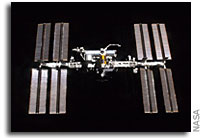
All ISS systems continue to function nominally, except those noted previously or below.
FE-4 Sergei Volkov performed the routine checkup of the SM (Service Module) PSS Caution & Warning panel as part of the regular Daily Morning Inspection.
At wake-up, CDR Mike Fossum & FE-5 Satoshi Furukawa completed another post-sleep session of the Reaction Self Test (Psychomotor Vigilance Self Test on the ISS) protocol. [RST is done twice daily (after wakeup & before bedtime) for 3 days prior to the sleep shift, the day(s) of the sleep shift and 5 days following a sleep shift. The experiment consists of a 5-minute reaction time task that allows crewmembers to monitor the daily effects of fatigue on performance while on ISS. The experiment provides objective feedback on neurobehavioral changes in attention, psychomotor speed, state stability, and impulsivity while on ISS missions, particularly as they relate to changes in circadian rhythms, sleep restrictions, and extended work shifts.]
Volkov conducted the daily inspection of the recently activated Russian BIO-5 Rasteniya-2 (“Plants-2”) payload with its LADA-01 greenhouse, verified proper watering of the KM A32 & A24 root modules. [Rasteniya-2 researches growth and development of plants (currently wheat) under spaceflight conditions in the LADA greenhouse from IBMP (Institute of Bio-Medical Problems, Russian: IMBP).]
Furukawa supported the JAXA experiment MYCO (Mycological Evaluation of Crew Exposure to ISS Ambient Air), by putting ~100 ml of water in each of 2 drinking water containers from the PWD (Potable Water Dispenser), followed by a joint review, with Fossum, of the MYCO sampling procedures scheduled tomorrow morning when he will collect the sample containers from Mike & himself. [MYCO evaluates the risk of microorganisms via inhalation and adhesion to the skin to determine which fungi act as allergens on the ISS. MYCO body samples are collected from the nasal cavity, the pharynx and the skin of crew during preflight, in flight and postflight focusing particularly on fungi which act as strong allergens in our living environment. Before sample collection, crewmembers are not to eat or drink anything except water, nor wash their face, brush their teeth, or gargle after you wake up to avoid science loss.]
Fossum uninstalled the three alignment guides from CIR (Combustion Integrated Rack) at Lab bay S3 to allow the PaRIS (Passive Rack Isolation System) to be activated before begin of ground-commanded CIR operations requiring a microgravity environment.
Afterwards, Mike conducted the weekly 10-min. CWC (Contingency Water Container) inventory as part of the on-going WRM (Water Recovery & Management) assessment of onboard water supplies. Updated “cue cards” based on the crew’s water calldowns are sent up every other week for recording changes. Today, there were no changes to the current card. [The current card (29-0002) lists 131 good CWCs (2,956.9 L total) for the five types of water identified on board: 1. technical water (31 CWCs with 1,249.2 L, for Elektron electrolysis, incl. 942.9 L in 24 bags containing Wautersia bacteria and 129 L in 3 clean bags for contingency use; 2. Silver potable water (no CWCs); 3. Iodinated water (88 CWCs with 1,591.4 L (also 19 expired bags with 345.4 L); 4. condensate water (79.3 L in 7 bags, plus 4 empty bags); and 5. waste/EMU dump and other (37.0 L in 2 CWCs, incl. 20.2 L from hose/pump flush). Wautersia bacteria are typical water-borne microorganisms that have been seen previously in ISS water sources. These isolates pose no threat to human health.]
Sergei Volkov started another turn with the periodic inspection and photo-documentation of window panes in the SM and DC1 Docking Compartment. The observed defects were recorded in image and text files on the RSK1 laptop for subsequent downlink via U.S. OCA assets. [Objective of the inspection, which uses a digital still camera (Nikon D2X w/SB-28DX flash) and voice recorder, today was to assess the pane surfaces on SM windows 2, 13, 14 and VL1 in DC1 for any changes (new cavities, scratches, new or expanded old stains or discolorations affecting transparency properties) since the last inspection. The new assessment will be compared to the earlier observations. Defects are measured with the parallax method which uses eyeball-sighting with a ruler and a right isosceles triangle to determine the defects’ size and position with respect to the window’s internal surface (parallax being the apparent change in an object’s position resulting from changing the observer’s position).]
FE-4 Sergei Volkov took the periodic Russian PZE-MO-3 test for physical fitness evaluation, his 2nd, spending ~90 min on the TVIS treadmill in unmotorized (manual control) mode and wearing the Kardiokassette KK-2000 belt with three chest electrodes. [The fitness test, controlled from the RSE-Med laptop, yields ECG (electrocardiogram) readings to the KK-2000 data storage device, later downlinked via the Regul (BSR-TM) payload telemetry channel. Before the run, the KK-2000 was synchronized with the computer date/time readings. For the ECG, the crewmember rests for 5 min., then works out on the treadmill, first walking 3 min. up to 3.5 km/h, then running at a slow pace of 5-6 km/h for 2 min, at moderate pace of 6.5 km/h for 2 min, followed by the maximum pace not exceeding 10 km/h for 1 min, then walking again at gradually decreasing pace to 3.5 km/h].
In the SM, Sergei performed a 4-hr IFM (Inflight Maintenance) on the EPS (Electrical Power System), removing & replacing the BUPT-1M current control unit (box A401) of the 800A battery #1. The old part was prepared for disposal on Progress 42P. [The battery’s ZRU charge/discharge unit #1 was deactivated by TsUP/Moscow beforehand and reactivated later. Each of the eight 800A 28 Volt batteries in the SM (the FGB has six) has its own ZRU charge/discharge unit, which tracks 49 battery parameters and is designed to increase the operating life of the battery by setting up charging & discharging modes. Each ZRU is comprised of one battery current converter (PTAB), one PTAB current control unit (BUPT-1M), and three charge/discharge current integrators (MIRT-3). Before connecting the new BUPT, TsUP turned off the BITS2-12 onboard telemetry measurement system and VD-SU control mode.]
Other activities completed by FE-4 Volkov included –
* The regular (weekly) inspection of the replaceable half-coupling of the 4GB4 hydraulic unit of the KOB-2 (Loop 2) of the Russian SOTR Thermal Control System, checking for coolant fluid hermeticity (leak-tightness),
* The periodic checkout & performance verification of IP-1 airflow sensors in the various RS (Russian Segment) hatchways; [inspected IP-1s are in the passageways PrK (SM Transfer Tunnel)-RO (SM Working Compartment), PkhO (SM Transfer Compartment)-RO, PkhO-DC1, PkhO-FGB PGO, PkhO-MRM2, FGB GA-MRM1, FGB PGO-FGB GA, and FGB GA-Node-1],
* The routine daily servicing of the SOZh system (Environment Control & Life Support System, ECLSS) in the SM; [regular daily SOZh maintenance consists, among else, of checking the ASU toilet facilities, replacement of the KTO & KBO solid waste containers, replacement of EDV-SV waste water and EDV-U urine containers and filling EDV-SV, KOV (for Elektron), EDV-ZV & EDV on RP flow regulator], and
* Tightening the BZV quick release screw clamps of the SSVP docking mechanism on the MRM1 “Rassvet”/Soyuz 27S StA docking interface, a periodic task (MRM1 itself is docked to the FGB GA).
At ~6:00am EDT, Satoshi Furukawa set up the G1 video camera and then recorded the scheduled JAXA Green Tea Ceremony experiment with the PI (Principal Investigator) at SSIPC/Tsukuba. After closeout, the mini-DV tape was downlinked via MPC (Multi Protocol Converter). [This was the first time that the famed Japanese tea ceremony was conducted in space. For the PI, a computer graphics artist, it is important to get data of dynamics of the fluid and bubbles that contain powder of green tea in microgravity for future computer graphics products. The PI wants to propose the succession of Japanese traditional culture and spirits toward the Space Age by designing the new tools and the new style to conduct the Japanese tea ceremony. These products will be used for exhibition in October 2011. PI questions are: How are bubbles formed, and what are their shapes and sizes in the micro-G state; are there unique phenomena in the micro-G state when the green tea is stirred, and what are the differences (advantages & disadvantages) between “on ground” and “in micro-G” for the future tea ceremony in space?]
In the Lab, Furukawa had about 1.5 hrs for installing the new T61p laptop to replace the previous A31p as OCA Router in the JSL LAN (Joint Station LAN/Local Area Network). Satoshi then worked with MCC-Houston and POIC (Payload Operations Integration Center/Huntsvilleuntsville) to verify the Router’s functionality, followed by photo documentation of its final setup.
Other activities on Satoshi’s work schedule were –
* Checking out (& replacing if necessary) a failed GLA (General Luminaire Assembly) lighting unit in COL (Columbus Orbital Module) for MLU4 (Module Lighting Unit 4) at loc. Ovhd F4,
* Conducting the periodic (approx. weekly) WRS (Water Recovery System) sampling in Node-3 using the TOCA (Total Organic Carbon Analyzer), after first initializing the software and priming (filling) the TOCA water sample hose; [after the approximately 2-hr TOCA analysis, results were transferred to an SSC (Station Support Computer) laptop via USB drive for downlink, and the data were also logged],
* Performing the periodic check of the CEVIS (Cycle Ergometer with Vibration Isolation) exercise machine’s four isolators,
* Completing his 4th session with the MedOps experiment WinSCAT (Spaceflight Cognitive Assessment Tool for Windows), logging in on the MEC (Medical Equipment Computer) laptop and going through the psychological evaluation exercise on the PC-based WinSCAT application; [WinSCAT is a monthly time-constrained questionnaire test of cognitive abilities, routinely performed by astronauts aboard the ISS every 30 days before or after the PHS (periodic health status) test or on special CDR’s, crewmembers or flight surgeons request. The test uses cognitive subtests that measure sustained concentration, verbal working memory, attention, short-term memory, spatial processing, and math skills. The five cognitive subtests are Coding Memory – Learning, Continuous Processing Task (CPT), Match to Sample, Mathematics, and Coding Delayed Recall. These WinSCAT subtests are the same as those used during NASA’s long-duration bed rest studies], and
* Conducting the regular (~weekly) inspection & maintenance, as required, of the CGBA-4 (Commercial Generic Bioprocessing Apparatus 4) and CGBA-5 payloads in their ERs (EXPRESS Racks), including cleaning the muffler air intakes.
CDR Fossum had ~3.5 hrs set aside for the new BCAT-5 (Binary Colloidal Alloy Test-5) payload operations, prepared yesterday. Mike configured the G1 camcorder in the Kibo JPM (JEM Pressurized Module) for taking documentary video, then set up the BCAT-5 hardware including the SSC-13 laptop temporarily relocated from the Lab, and started the experiment which involves homogenization, a first crystal check of each session, crystal photography, and sample photography. Before sleeptime, the CDR will change the camera battery (required after 8 hrs). [The new experiment run is with a Harvard University phase separation sample using a different setup than for the recent crystal samples 9 & 10, mainly requiring an SSC laptop with EarthKAM timing software, power cables and camera USB cable. For illumination, the Mini-MagLite and Flash batteries do not need to be changed yet, but the camera will need a freshly charged battery. After Mike mixed the sample (#4) for phase separation and took test photos, the EarthKAM software on the SSC-13 laptop began taking pictures of Sample 4 for 13 days at different intervals throughout the run. This will require camera battery changes twice a day and image check with a battery change once per day. BCAT-5 is operating in the JPM because some time ago the crew deemed the US Lab too crowded for running it.]
Mike also serviced the ARED workout machine, performing periodic maintenance by evacuating its cylinder flywheels to maintain proper vacuum condition & sensor calibration.
Before “Presleep” period tonight, the CDR turns on the MPC and starts the data flow of video recorded during the day to the ground, with POIC (Payload Operations & Integration Center) routing the onboard HRDL (High-Rate Data Link). After about an hour, Mike will turn MPC off again. [This is a routine operation which regularly transmits HD onboard video (live or tape playback) to the ground on a daily basis before sleeptime.]
Before sleeptime, Sergei will activate the RSE-LCS (Laser Communication System) A31p laptop in the SM to start recording data sent overnight per auto control protocol from the BTLS-N External Onboard Laser Communication Terminal via RS-232 line. Tomorrow morning, FE-4 will dump (copy) the data from the RSE-LCS to the RSS2 laptop for data downlink, for another test of the TEKh-39 LCS (Russian: SLS) system.
CDR & FE-5 had their standard weekly PMCs (Private Medical Conferences) via S- & Ku-band audio/video, Fossum at ~8:20am, Furukawa at ~1:45pm EDT.
Working from the Russian discretionary “time permitting” task list, Volkov completed the daily IMS (Inventory Management System) maintenance, updating/editing its standard “delta file” including stowage locations, for the regular weekly automated export/import to its three databases on the ground (Houston, Moscow, Baikonur).
A task listed for Sergei on the Russian discretionary “time permitting” job for today continues to be the preparation & downlinking of more reportages (written text, photos, videos) for the Roskosmos website to promote Russia’s manned space program (max. file size 500 Mb).
The crew worked out with their regular 2-hr physical exercise protocol on the CEVIS cycle ergometer with vibration isolation (FE-5), TVIS treadmill with vibration isolation & stabilization (FE-4), ARED advanced resistive exercise device (CDR, FE-4, FE-5), and T2/COLBERT advanced treadmill (CDR).
JAXA Marangoni Experiment: The crew was advised of another Marangoni bridge building event tonight (7:00pm-1:00am), the 3rd in 24 planned bridge buildings in Increment 29/30. The experiment is performed in the Kibo JPM during crew sleep (since the liquid bridge to be formed is sensitive to g-jitter), 4 days/week at most and 24 runs in total. After the liquid bridge has been formed, the ground imposes a temperature gradient on it to produce Marangoni convection. The crew, which will be informed regularly, has been asked to avoid any disturbances in this timeframe. Even disturbances in other modules can be transmitted and cause the liquid bridge in JPM to break up, resulting in science loss.
FGB Refueling: The propellant transfer from the Progress 42P tanks via the DC1 Docking Compartment to the FGB long high-pressure fuel and oxidizer tanks (BVDG for the UDMH fuel, & BVDO for the NTO oxidizer) on 9/20 was successfully performed, transferring 170 kg of fuel & 102 kg of oxidizer.
CEO (Crew Earth Observation) targets uplinked for today were Munich, Germany (a request from ESA for this capital city in the state of Bavaria. Looking slightly left of track towards the center of the oldest part of this city of 1.4 million to capture Oktoberfest activities), Beirut, Lebanon (this capital city of over 2 million is located on the central Lebanese coast. After tracking over the western Turkish coast, looking left of track towards the coast for this roughly triangular-shaped, city on a peninsula jutting westward into the Mediterranean Sea), Lusaka, Zambia (ISS had a nadir orbit over this small capital city. Visual cues were the light tone of the city area, the Kafue River swamps beyond the city, and center-pivot farmland on the near side of the city), St. Georges, Grenada (scattered clouds may have been present over the capital city of Grenada. ISS had a nadir pass over this city that is located on a horseshoe-shaped harbor along the southwestern coast. Overlapping mapping frames of the urban area were requested), Georgetown, Guyana (ISS had a nadir-viewing overpass of this capital city. The city is located at the mouth of the Demerara River on the Atlantic Ocean coastline. Overlapping mapping frames of the urban and adjacent rural areas were requested), and Serra da Cangalha Impact Crater, Brazil (the crew has been producing superb images of this crater, and the CEO staff is trying to acquire more images with the least amount of cloud cover. This 12 km in diameter crater located in Brazil is a subtle feature on the landscape. It is mainly defined by a circular drainage pattern surrounding the remnants of a central peak. Using recent agricultural patterns, the crew was to try to image a detailed overlapping mapping strip of the crater).
ISS Orbit (as of this morning, 8:41am EDT [= epoch])
* Mean altitude – 383.8 km
* Apogee height – 391.0 km
* Perigee height – 376.5 km
* Period — 92.23 min.
* Inclination (to Equator) — 51.64 deg
* Eccentricity — 0.00107
* Solar Beta Angle — -29.8 deg (magnitude decreasing)
* Orbits per 24-hr. day — 15.61
* Mean altitude loss in the last 24 hours — 47 m
* Revolutions since FGB/Zarya launch (Nov. 98) — 73,595
* Time in orbit (station) — 4688 days
* Time in orbit (crews, cum.) — 3975 days
Significant Events Ahead (all dates Eastern Time and subject to change):
————–Three-crew operations (Increment 29)————-
10/29/11 — Progress M-10M/42P undocking
10/30/11 — Progress M-13M/45P launch
11/01/11 — Progress M-13M/45P docking
11/14/11 — Soyuz TMA-03M/28S launch – D.Burbank (CDR-30)/A.Shkaplerov/A.Ivanishin
11/16/11 — Soyuz TMA-03M/28S docking (MRM2)
————–Six-crew operations————-
11/22/11 — Soyuz TMA-02M/27S undock/landing (End of Increment 29)
————–Three-crew operations————-
11/30/11 — SpaceX Falcon 9/Dragon — Target date
12/26/11 — Soyuz TMA-04M/29S launch – O.Kononenko (CDR-31)/A.Kuipers/D.Pettit — (date “on or about”)
12/28/11 — Soyuz TMA-04M/29S docking (MRM1) — (date “on or about”)
————–Six-crew operations—————-
TBD — Progress M-13M/45P undock
TBD — Progress M-14M/46P launch
TBD — Progress M-14M/46P docking (DC-1)
02/29/12 — ATV3 launch readiness
TBD — Soyuz TMA-03M/28S undock/landing (End of Increment 30)
————–Three-crew operations————-
03/30/12 — Soyuz TMA-05M/30S launch – G.Padalka (CDR-32)/J.Acaba/K.Volkov
04/01/12 — Soyuz TMA-05M/30S docking (MRM2)
————–Six-crew operations—————-
05/05/12 — 3R Multipurpose Laboratory Module (MLM) w/ERA – launch on Proton (under review)
05/06/12 — Progress M-14M/46P undock
05/07/12 — 3R Multipurpose Laboratory Module (MLM) – docking (under review)
05/16/12 — Soyuz TMA-04M/29S undock/landing (End of Increment 31)
————–Three-crew operations————-
05/29/12 – Soyuz TMA-06M/31S launch – S.Williams (CDR-33)/Y.Malenchenko/A.Hoshide
05/31/12 – Soyuz TMA-06M/31S docking
————–Six-crew operations—————-
09/18/12 — Soyuz TMA-05M/30S undock/landing (End of Increment 32)
————–Three-crew operations————-
10/02/12 — Soyuz TMA-07M/32S launch – K.Ford (CDR-34)/O.Novitskiy/E.Tarelkin
10/04/12 – Soyuz TMA-07M/32S docking
————–Six-crew operations————-
11/16/12 — Soyuz TMA-06M/31S undock/landing (End of Increment 33)
————–Three-crew operations————-
11/30/12 — Soyuz TMA-08M/33S launch – C.Hadfield (CDR-35)/T.Mashburn/R.Romanenko
12/02/12 – Soyuz TMA-08M/33S docking
————–Six-crew operations————-
03/xx/13 — Soyuz TMA-07M/32S undock/landing (End of Increment 34)
————–Three-crew operations————-
03/xx/13 – Soyuz TMA-09M/34S launch – P.Vinogradov (CDR-36)/C.Cassidy/A.Misurkin
03/xx/13 – Soyuz TMA-09M/34S docking
————–Six-crew operations————-
05/xx/13 – Soyuz TMA-08M/33S undock/landing (End of Increment 35)
————–Three-crew operations————-
05/xx/13 – Soyuz TMA-10M/35S launch – M.Suraev (CDR-37)/K.Nyberg/L.Parmitano
05/xx/13 – Soyuz TMA-10M/35S docking
————–Six-crew operations————-
09/xx/13 – Soyuz TMA-09M/34S undock/landing (End of Increment 36)
————–Three-crew operations————-
09/xx/13 – Soyuz TMA-11M/36S launch – M.Hopkins/TBD (CDR-38)/TBD
09/xx/13 – Soyuz TMA-11M/36S docking
————–Six-crew operations————-
11/xx/13 – Soyuz TMA-10M/35S undock/landing (End of Increment 37)
————–Three-crew operations————-
11/xx/13 – Soyuz TMA-12M/37S launch – K.Wakata (CDR-39)/R.Mastracchio/TBD
11/xx/13 – Soyuz TMA-12M/37S docking
————–Six-crew operations————-
03/xx/14 – Soyuz TMA-11M/36S undock/landing (End of Increment 38)
————–Three-crew operations————-



