
NASA ISS On-Orbit Status 18 October 2011
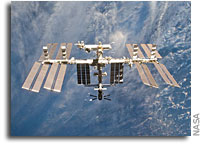
All ISS systems continue to function nominally, except those noted previously or below.
FE-4 Sergei Volkov performed the routine checkup of the SM (Service Module) PSS Caution & Warning panel as part of the regular Daily Morning Inspection.
During Postsleep, CDR Fossum & FE-5 Furukawa each drew a blood sample for the CSA (Canadian Space Agency) Vascular Blood Collection protocol, their 2nd. FE-5 then set up the RC (Refrigerated Centrifuge) for spinning the coagulated samples prior to stowing them in the MELFI-1 (Minus Eighty Laboratory Freezer for ISS 1), after recording the blood tube bar codes. (Done last: 10/17). [Led by the Canadian University of Waterloo’s Dr. Richard Hughson, VASCULAR is studying the long-term effects of weightlessness on the cardiovascular system. Previous medical tests have shown that astronauts who live and work in space for long periods of time experience changes in their blood vessels that are like the aging on Earth. But in space these changes happen in months instead of years and decades. The blood vessels become stiffer and lose their elasticity. This can change blood pressure and affect blood flow to vital organs such as the brain and kidney. Six international astronauts are taking part in VASCULAR, each staying about 6 months on the station. Their blood samples will be returned to Dr. Hughson’s laboratory for measurements of unique protein and hormone markers that could accelerate vascular aging. The results of VASCULAR will offer a better understanding of the inner mechanisms of cardiovascular changes during long-duration space missions. The findings can also help people who suffer from premature cardiovascular aging right now back home on Earth.]
Volkov conducted the routine verification of yesterday’s refreshes of the IUS AntiVirus program on all Russian VKS auxiliary network laptops RSS1, RSS2, RSK1-T61p & RSK2. [Antivirus update procedures have changed since the recent SSCV4 software update. Before the installation on 8/8 of the new automated procedure, the refresh was done manually on Mondays on RSS2, copying the files to the RSS2 service folder, then launching update scripts on the network laptops RSS1, RSK1-T61p & RSK2 and finally manually updating non-network laptops RSE-Med & RSE1. On Tuesdays, the anti-virus scanning results are regularly verified on all laptops. Nominally, Russian network laptops have software installed for automatic anti-virus update; fresh data is copied on RSK1-T61p & RRSK2 every time a computer is rebooted with a special login, and on RSS1 once daily. On Russian non-network laptops antivirus definition file update is done by the crew once every two weeks on Monday.]
Sergey & Satoshi took the (approx.) monthly O-OHA (On-Orbit Hearing Assessment) test, a 30-min NASA environmental health systems examination to assess the efficacy of acoustic countermeasures, using a special software application on the MEC (Medical Equipment Computer) laptop. [The O-OHA audiography test involves minimum audibility measurements for each ear over a wide range of frequencies (0.25-10 kHz) and sound pressure levels, with the crewmembers using individual-specific Prophonics earphones, new Bose ANC headsets (delivered on 30P) and the SLM (sound level meter). To conduct the testing, the experimenter is supported by special EarQ software on the MEC, featuring an up/down-arrow-operated slider for each test frequency that the crewmember moves to the lowest sound pressure level at which the tone can still be heard. The baseline test is required not later than about Flight Day 14 for each new Expedition and is then generally performed once per month. Note: There has been temporary hearing deficits documented on some U.S. and Russian crewmembers, all of which recovered to pre-mission levels.]
Mike configured the MSG (Microgravity Science Glovebox) for Standby and powered down its A31p laptop. Before sleeptime, Mike will perform a visual inspection of the rack and then reactivate the MSG facility prior to payload operations.
The CDR also completed the periodic manual fill of the WHC (Waste & Hygiene Compartment) EDV-SV (condensate container) flush water tank from the PWB (Potable Water Bus) for about 19 min (during which WHC was not available).
Working on the HRF2 (Human Research Facility 2) in COL (Columbus Orbital Laboratory), Furukawa switched the COM port of the rack’s PC (Portable Computer) from “1” to “0”, reconfigured the serial adapter, verified proper communications with the Actiwatch Reader and then stowed the latter.
For his on-going 2nd (FD75) Ambulatory Monitoring session of the ESA ICV (Integrated Cardiovascular) Alternate experiment, Satoshi reached the midpoint at about 11:10am, after which he started the second 24h data collection period. [For the second 24 hr period, the Cardiopres was temporarily doffed and the HM2 HiFi CF Card and AA Battery were changed out to allow continuation of the session for another 24 hours. After data collection is complete, the Actiwatches and both HM2 HiFi CF Cards are downloaded to the HRF PC1, while Cardiopres data are downloaded to the EPM (European Physiology Module) Rack and transferred to the HRF PC1 via a USB key for downlink. The sessions are scheduled at or around FD14, FD30, FD75, FD135 and R-15 (there will be fewer sessions if mission duration is less than six months).
Furukawa also conducted the periodic check of the CEVIS (Cycle Ergometer with Vibration Isolation) exercise machine’s four isolators for wear & tear, checking for cable stop wear and wire pulling back into cable stop. [Isolator A was found to meet the failure criteria of “9 or more severed wires”. It was replaced with degraded spare Isolator B (4 good wires, 3 frayed) from the available on-orbit spares.]
Later, FE-5 performed regular maintenance on the ARED (Advanced Resistive Exercise Device), inspecting and greasing its VIS (Vibration Isolation System) Y- & Z-axes rails & rollers and upper stops.
FE-4 Volkov completed the daily inspection of the Russian BIO-5 Rasteniya-2 (“Plants-2”) payload with its LADA-01 greenhouse, verifying proper watering of the KM A32 & A24 root modules. [Rasteniya-2 researches growth and development of plants (currently wheat) under spaceflight conditions in the LADA greenhouse from IBMP (Institute of Bio-Medical Problems, Russian: IMBP).]
After the overnight battery charging, Sergey installed and started the equipment of the GFI-1 “Relaksatsiya” (Relaxation) Earth Observation experiment at SM window #9 for another run, using it to observe the Earth atmosphere and surface at specific uplinked times. Later, the CDR dismantled the equipment again and dumped the data via the RSS1 terminal. [Using the GFI-1 UFK “Fialka-MV-Kosmos” ultraviolet camera, SP spectrometer and SONY HVR-Z7 HD (High Definition) camcorder, the experiment observes the Earth atmosphere and surface from window #9, with spectrometer measurements controlled from Laptop 3. “Relaxation”, in Physics, is the transition of an atom or molecule from a higher energy level to a lower one, emitting radiative energy in the process as equilibrium is achieved.]
Using the RS1 & RS2 laptops with a USB flash drive, Sergey performed re-initialization of the file system of the KTsP1 Central Post Computer (CPC1) after the ground had switched the Central Post BVS computer system to KTsP2.
Later, Volkov turned on the GA/gas analyzer in the Soyuz TMA-02M/27S (#702), docked at MRM1 Rassvet. [The GA’s are activated periodically to check the cabin air in the Descent Modules.]
In the US Lab, with the “upstream” DDCU (DC/DC Converter Unit) B powered down yesterday for safing, Mike Fossum today removed & replaced the failed RPCM (Remote Power Control Module) LA1B-H. [The ~3hr IFM (Inflight Maintenance) required safing steps, rotating the MELFI-3 rack at S1 down for access after demating its umbilicals, removing the shear panel in front of SPDA (Secondary Power Distribution Assembly) at LA1B, then removing the failed RPCM and replacing it with a new spare. The following close-out operation reversed the activities. The temporarily deactivated Lab UOP-6 (Utility Outlet Panel 6) will be powered up before sleeptime. The successful R&R recovers the Lab smoke detector (LABPD1). Ground teams are currently in the process of recovering the powered down LA1B loads.]
Fossum also relocated 8 CWC-I (Contingency Water Containers-Iodine) bags in the PMM (Permanent Multipurpose Module) Leonardo. [The CDR retrieved 4 CWC-I bags that are nearing expiration from the PMM Standoff location and staged them in PMM Endcone for easier access, then restowed the bags currently in PMM Endcone in PMM Standoff.]
For the CGBA-5/CSI-5 (Commercial Generic Bioprocessing Apparatus 5 / Science Insert-05) experiment, FE-5 deactivated the payload, uncabled it for accessing its interior, removed the 6 used germination flasks, planted 6 new germination flasks, recabled the payload and restored CGBA-5 to operation, powering it back on.
The Japanese flight engineer then conducted the regular (~weekly) inspection & maintenance, as required, of the CGBA-4 (Commercial Generic Bioprocessing Apparatus 4) and CGBA-5 payloads in their ERs (EXPRESS Racks) at Lab O2 & O1, focusing on cleaning the muffler air intakes.
FE-4 had another ~3 hrs for stowing waste and other excessed cargo in the resupply ship-turned-trash can Progress 42P.
Later, Volkov conducted the routine daily servicing of the SOZh system (Environment Control & Life Support System, ECLSS) in the SM. [Regular daily SOZh maintenance consists, among else, of checking the ASU toilet facilities, replacement of the KTO & KBO solid waste containers, replacement of EDV-SV waste water and EDV-U urine containers and filling EDV-SV, KOV (for Elektron), EDV-ZV & EDV on RP flow regulator.]
Sergey also completed his 4th data collection session for the psychological MBI-16 Vzaimodejstvie (“Interactions”) program, accessing and completing the computerized study questionnaire on the RSE-Med laptop and saving the data in an encrypted file. [The software has a “mood” questionnaire, a “group & work environment” questionnaire, and a “critical incidents” log. Results from the study, which is also mirrored by ground control subjects, could help to improve the ability of future crewmembers to interact safely and effectively with each other and with Mission Control, to have a more positive experience in space during multi-cultural, long-duration missions, and to successfully accomplish mission activities.]
Mike performed his 4th session of the new Treadmill Kinematics program on the T2/COLBERT treadmill, setting up the HD camcorder in Node-1, placing tape markers on his body, recording a calibration card in the FOV (Field of View) and then conducting the workout run within a specified speed range. [Purpose of the Kinematics T2 experiment is to collect quantitative data by motion capture from which to assess current exercise prescriptions for participating ISS crewmembers. Detailed biomechanical analyses of locomotion will be used to determine if biomechanics differ between normal and microgravity environments and to determine how combinations of external loads and exercise speed influence joint loading during in-flight treadmill exercise. Such biomechanical analyses will aid in understanding potential differences in gait motion and allow for model-based determination of joint & muscle forces during exercise. The data will be used to characterize differences in specific bone and muscle loading during locomotion in the two gravitational conditions. By understanding these mechanisms, appropriate exercise prescriptions can be developed that address deficiencies.]
Afterwards, Fossum shut down the T2 software in order to transfer the accumulated data, then turned off the T2 display for a subsequent rack power cycle to clear memory.
Before “Presleep” period tonight, Furukawa turns on MPC (Multi Protocol Converter) HD routing and starts the Ku-band data flow of video recorded during the day to the ground, with POIC (Payload Operations & Integration Center) routing the onboard HRDL (High-Rate Data Link). After about an hour, Mike will turn MPC routing off again. [This is a routine operation which regularly transmits HD onboard video (live or tape playback) to the ground on a daily basis before sleeptime.]
At ~4:25am EDT, Satoshi powered up the SM’s amateur radio equipment (Kenwood VHF transceiver with manual frequency selection, headset, & power supply) and at 4:30am conducted a ham radio session with students at school with students at Seiryo Elementary School in Seto, Aichi, Japan.
At ~2:40pm, Sergey Volkov had his standard weekly PMC (Private Medical Conference) via S- & Ku-band audio/video.
At ~3:00pm, Fossum & Furukawa joined in a Crew Handover teleconference with the upcoming Exp-30 crew. [Purpose: To begin the handover process prior to the arrival on orbit through Videocons and Data Exchanges between the current crew and the upcoming crew.]
The crew worked out with their regular 2-hr physical exercise protocol on the CEVIS cycle ergometer withy vibration isolation (FE-5), TVIS treadmill with vibration isolation & stabilization (FE-4), ARED advanced resistive exercise device (CDR, FE-5), T2/COLBERT advanced treadmill (CDR), and VELO ergometer bike with load trainer (FE-4).
Tasks listed for Sergei Volkov on the Russian discretionary “time permitting” job for today were –
* Continuing the preparation & downlinking of more reportages (written text, photos, videos) for the Roskosmos website to promote Russia’s manned space program (max. file size 500 Mb),
* Taking care of the daily IMS (Integrated Management System) maintenance, updating/editing its standard “delta file” including stowage locations, for the regular weekly automated export/import to its three databases on the ground (Houston, Moscow, Baikonur),
* Another ~30-min. session for Russia’s EKON Environmental Safety Agency, making observations and taking KPT-3 aerial photography of environmental conditions on Earth using the NIKON D3X camera with the RSK-1 laptop, and
CEO (Crew Earth Observation) targets uplinked for today were Dili, East Timor (Timor-Leste) (looking left for the capital city of the new nation of East Timor [independence from Indonesia 2002]. Dili lies on the north coast of the island of Timor. Viewing conditions were as good as they get — looking between cumulus clouds. The territory of East Timor includes an “exclave” in the west half of the island), and India-Arabian Sea smog mass (Dynamic event. A large mass of smog is moving slowly west into the Arabian Sea from the Indian subcontinent. Looking left, beyond cloud masses, trying to shoot the margin, and any other features, of the haze mass. The crew was to continue shooting until the coastline came into view so that their images can be located geographically. Opportunities seldom arise for acquiring smog imagery. Although not ideal, this pass had these advantages: (i) relatively low sun illumination, (ii) oblique viewing angle from the ISS, and (iii) the backdrop of the sea surface. The aerosol mass comprises industrial pollutants as well as dust and household-fire smoke).
ISS Orbit (as of this morning, 6:29am EDT [= epoch])
* Mean altitude – 385.0 km
* Apogee height – 395.7 km
* Perigee height – 374.3 km
* Period — 92.25 min.
* Inclination (to Equator) — 51.64 deg
* Eccentricity — 0.0015811
* Solar Beta Angle — 34.5 deg (magnitude decreasing)
* Orbits per 24-hr. day — 15.61
* Mean altitude loss in the last 24 hours — 128 m
* Revolutions since FGB/Zarya launch (Nov. 98) — 74,015
* Time in orbit (station) — 4715 days
* Time in orbit (crews, cum.) — 4002 days
Significant Events Ahead (all dates Eastern Time and subject to change):
————–Three-crew operations (Increment 29)————-
10/19/11 — ISS Reboost
10/29/11 — Progress M-10M/42P undocking (5:01am EDT)
10/30/11 — Progress M-13M/45P launch (6:11am)
11/02/11 — Progress M-13M/45P docking (~7:42am)
11/13/11 — Soyuz TMA-03M/28S launch – D.Burbank (CDR-30)/A.Shkaplerov/A.Ivanishin (11:14pm)
11/16/11 — Soyuz TMA-03M/28S docking (MRM2) (~12:45am)
————–Six-crew operations————-
11/22/11 — Soyuz TMA-02M/27S undock/landing (End of Increment 29) (~9:21pm)
————–Three-crew operations————-
11/30/11 — SpaceX Falcon 9/Dragon — Target date
12/26/11 — Soyuz TMA-04M/29S launch – O.Kononenko (CDR-31)/A.Kuipers/D.Pettit — (date “on or about”)
12/28/11 — Soyuz TMA-04M/29S docking (MRM1) — (date “on or about”)
————–Six-crew operations—————-
TBD — Progress M-13M/45P undock
TBD — Progress M-14M/46P launch
TBD — Progress M-14M/46P docking (DC-1)
02/29/12 — ATV3 launch readiness
TBD — Soyuz TMA-03M/28S undock/landing (End of Increment 30)
————–Three-crew operations————-
03/xx/12 — Soyuz TMA-05M/30S launch – G.Padalka (CDR-32)/J.Acaba/K.Volkov
04/xx/12 — Soyuz TMA-05M/30S docking (MRM2)
————–Six-crew operations—————-
05/05/12 — 3R Multipurpose Laboratory Module (MLM) w/ERA – launch on Proton (under review)
05/06/12 — Progress M-14M/46P undock
05/07/12 — 3R Multipurpose Laboratory Module (MLM) – docking (under review)
05/xx/12 — Soyuz TMA-04M/29S undock/landing (End of Increment 31)
————–Three-crew operations————-
05/xx/12 – Soyuz TMA-06M/31S launch – S.Williams (CDR-33)/Y.Malenchenko/A.Hoshide
05/xx/12 – Soyuz TMA-06M/31S docking
————–Six-crew operations—————-
09/xx/12 — Soyuz TMA-05M/30S undock/landing (End of Increment 32)
————–Three-crew operations————-
10/xx/12 — Soyuz TMA-07M/32S launch – K.Ford (CDR-34)/O.Novitskiy/E.Tarelkin
10/xx/12 – Soyuz TMA-07M/32S docking
————–Six-crew operations————-
11/xx/12 — Soyuz TMA-06M/31S undock/landing (End of Increment 33)
————–Three-crew operations————-
11/xx/12 — Soyuz TMA-08M/33S launch – C.Hadfield (CDR-35)/T.Mashburn/R.Romanenko
12/xx/12 – Soyuz TMA-08M/33S docking
————–Six-crew operations————-
03/xx/13 — Soyuz TMA-07M/32S undock/landing (End of Increment 34)
————–Three-crew operations————-
03/xx/13 – Soyuz TMA-09M/34S launch – P.Vinogradov (CDR-36)/C.Cassidy/A.Misurkin
03/xx/13 – Soyuz TMA-09M/34S docking
————–Six-crew operations————-
05/xx/13 – Soyuz TMA-08M/33S undock/landing (End of Increment 35)
————–Three-crew operations————-
05/xx/13 – Soyuz TMA-10M/35S launch – M.Suraev (CDR-37)/K.Nyberg/L.Parmitano
05/xx/13 – Soyuz TMA-10M/35S docking
————–Six-crew operations————-
09/xx/13 – Soyuz TMA-09M/34S undock/landing (End of Increment 36)
————–Three-crew operations————-
09/xx/13 – Soyuz TMA-11M/36S launch – M.Hopkins/TBD (CDR-38)/TBD
09/xx/13 – Soyuz TMA-11M/36S docking
————–Six-crew operations————-
11/xx/13 – Soyuz TMA-10M/35S undock/landing (End of Increment 37)
————–Three-crew operations————-
11/xx/13 – Soyuz TMA-12M/37S launch – K.Wakata (CDR-39)/R.Mastracchio/TBD
11/xx/13 – Soyuz TMA-12M/37S docking
————–Six-crew operations————-
03/xx/14 – Soyuz TMA-11M/36S undock/landing (End of Increment 38)
————–Three-crew operations————-



