
NASA Mars Odyssey THEMIS Image: Impact Crater 10-21-2003
Mars Global Surveyor Mars Orbiter Camera
MGS MOC Release No. MOC2-520, 21 October 2003
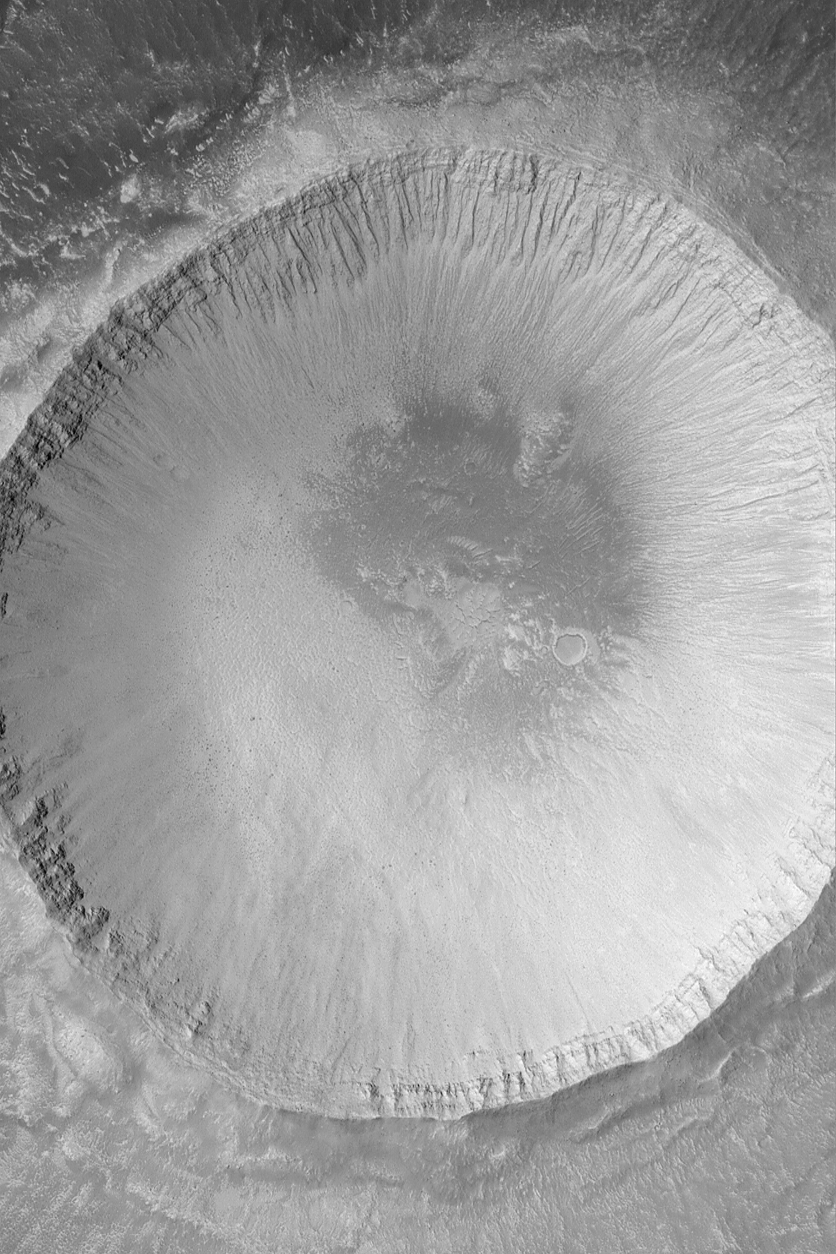 NASA/JPL/Malin Space Science Systems |
Craters formed by meteor impact are the “tools of the trade”
for planetary geologists. Craters have formed on every solid
Solar System body, and thus they can be compared to each
other and provide insights as to the nature of the object
on which the crater occurs. Mars is pocked with craters of
a wide range of diameters, from the giant Hellas Basin,
which is several thousand kilometers across, to tiny craters
of only a few tens of meters in diameter. The impact crater
shown in this Mars Global Surveyor (MGS) Mars Orbiter Camera (MOC)
picture is located in northern Elysium Planitia
near 33.1°N, 230.2°W. It is about 3.6 km (2.2 mi)
across, nearly four times the size of the famous Meteor Crater
in northern Arizona on the North American continent. The impact
that formed this crater exposed layered bedrock (visible in the
upper walls of the crater). Erosion, mostly by dry mass movement,
has created gullies and piles of talus on the crater walls. Dark
dots at the base of the wall are large boulders that have come
down these slopes. The
picture covers an area 3 km (1.9 mi) wide. The scene is illuminated
by sunlight from the left/lower left.
Malin Space Science Systems and the California Institute of Technology
built the MOC using spare hardware from the Mars Observer mission.
MSSS operates the camera from its facilities in San Diego, California.
The Jet Propulsion Laboratory’s Mars Surveyor Operations Project
operates the Mars Global Surveyor spacecraft with its industrial
partner, Lockheed Martin Astronautics, from facilities in Pasadena,
California and Denver, Colorado.



