
3rd Annual International Space Station Research & Development Conference Abstract Deadline Extended
Discoveries, Applications and Opportunities Organized by the American Astronautical Society with the support of the Center for the Advancement of Science in Space (CASIS) and NASA Hyatt Regency McCormick Place Chicago, Illinois
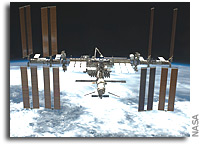
The annual International Space Station (ISS) Research and Development Conference will be held June 17-19, 2014, at the Hyatt Regency McCormick Place in Chicago. Abstracts and poster proposals are solicited under the categories of Discoveries in Microgravity Science; Discoveries in Space Science, Earth Science, Engineering and Education; Applications Benefiting Earth; Applications Enabling Exploration; Applications in Technology; Commercial Applications; and Opportunities. Topics should relate to science, exploration and technology activities (past, present, planned or under development) on the International Space Station.
One of NASA’s top strategic goals is to sustain the operation and full use of the International Space Station and expand efforts to utilize the ISS as a National Laboratory for scientific, technological, diplomatic and educational purposes and for supporting future objectives in human space exploration (2011 NASA Strategic Plan).
NASA’s International Space Station website http://www.nasa.gov/mission_pages/station/research/experiments_category.html
Biology and Biotechnology: In microgravity, controls on the directionality and geometry of cell and tissue growth can be dramatically different to those on Earth. Various experiments have used the culture of cells, tissues and small organisms on orbit as a tool to increase our understanding of biological processes in microgravity.
Earth and Space Science: The presence of the space station in low-Earth orbit provides a unique vantage point for collecting Earth and space science data. From an average altitude of about 400 km, details in such features as glaciers, agricultural fields, cities, and coral reefs taken from the ISS can be layered with other sources of data, such as orbiting satellites, to compile the most comprehensive information available.
Educational Activities: The space station provides a unique platform for inspiring students to excel in mathematics and science. Station educational activities have had a positive impact on thousands of students by involving them in station research, and by using the station to teach them the science and engineering that are behind space exploration.
Human Research: The space station is being used to study the risks to human health that are inherent in space exploration. Focal research questions address the mechanisms of the risks and develop test countermeasures to reduce these risks. Research on space station addresses the major risks to human health from residence in a long-duration microgravity environment. Results from this research are key enablers for future long-duration missions beyond low Earth orbit.
Physical Sciences: The space station provides the only place to study long-term physical effects in the absence of gravity. This unique microgravity environment allows different physical properties to dominate systems, and these have been harnessed for a wide variety of physical sciences.
Technology and Exploration: The space station is an important testbed to develop and demonstrate emerging new technologies for Earth and space application. NASA’s 2011 Strategic Plan calls for innovative new space technologies for our exploration, science and economic future. For example, the MEDIPHAN is a new technology demonstrated on ISS that was inducted into the Space Technology Hall of Fame in 2013 and has now been developed into a commercial product improving telemedicine on Earth. The NASA 2013 Authorization Act states that the ISS is the ideal short-term testbed for future exploration systems development, including long-duration space travel.
Presentations and posters will be accepted based on the quality of the abstract, the originality of the work and/or ideas, and the anticipated interest in the proposed subject.Submissions based on experimental results or current data, or report on ongoing missions, are especially encouraged. Accepted presentations will be selected for plenary sessions, parallel technical sessions or poster displays. Authors may indicate preferences for posters in the submittal process. The working language for the conference is English.
– Discoveries in Microgravity Science include key results that contribute to fundamental scientific advancements in the following fields:
– Life Science
– Physical Science
– Human Research
– Discoveries in Space Science, Earth Science, Engineering and Education include key results that contribute to advancements in knowledge and state-of-the-art in the following fields:
– Astrophysics, Heliophysics, or Earth Science
– Enabling Exploration/Engineering/Technology Development
– Educational Activities
– Applications Benefiting Earth are those results of ISS utilization that have improved the lives of those on Earth, including (but not limited to) the development of new technologies, processes, and procedures, as well as new knowledge that will advance the state of the art of existing products or processes or commercial economic development on Earth.
– Applications Enabling Exploration include new technologies and procedures resulting from ISS demonstration and testing to advance the state of the art in technology, processes, or procedures that will advance NASA’s exploration goals.
– Opportunities include future ISS research and technology opportunities that have potential for collaboration across the ISS disciplines and projects for advancing knowledge and state of the art in basic Discovery, Earth, and Space Benefits.
<
VENUE
Hyatt Regency McCormick Plac e2233 S. Martin Luther King DriveC hicago, Illinois 60616
http://resweb.passkey.com/go/AstronauticalSociety
– special room rate $186 per night –
INFORMATION FOR PRESENTERS
Due to the large number of expected submissions, presenters are encouraged to submit abstracts early; the extended deadline is March 3, 2014.. Notification of acceptance will be sent via email. Detailed presenter instructions will be sent by email following acceptance. Presenters may access the web-based abstract submittal system using the following linkhttp://aas.pxi.com/aas/
Using the online submission process, presenters are expected to provide:
– a presentation title and appropriate category (discovery, applications or opportunities); appropriate discipline (biology and biotechnology, Earth and space science, educational activities, human research, physical sciences or technology, and exploration) as well as the name, affiliation, postal address, telephone number, and email address of the corresponding presenter and each contributor,
– an extended abstract in the Portable Document File (PDF) format of no more than 1000 words that includes the title and authors and provides a clear and concise statement of the problem to be addressed, the proposed method of solution, the results expected or obtained, research performed or planned, and an explanation of its significance to Earth or space applications and to space station utilization, with pertinent space station references and supporting tables and figures as necessary.
Technology Transfer Notice – Technology transfer guidelines substantially extend the time required to review abstracts and manuscripts by private enterprises and government agencies. To preclude late submissions and withdrawals, it is the responsibility of the author(s) to determine the extent of necessary approvals prior to submitting an abstract.
AAS Technical Chair Dr. David B. Spencer Vice President Technical, AAS Department of Aerospace Engineering The Pennsylvania State University229 Hammond Building University Park, PA 16902 814-865-4537
NASA Technical Chair Dr. Julie Robinson ISS Program Scientist NASA Johnson Space Center2101 NASA ParkwayHouston, TX 77058 281-483-5582
CASIS Technical ChairTimothy J. Yeatman, M.D. Chief Scientist Center for the Advancement of Science in Space 6905 N. Wickham Rd, Suite 100 Melbourne, FL 32940321-253-5101
AAS General Chair Mr. Walt Faulconer Executive Vice President, AAS Strategic Space Solutions, LLC P.O. Box 223 Gleneig, MD 21737-0223 410-446-0226
wfaulconer@strategicspacesolutions.com
CASIS General Chair Duane Ratliff Chief Operating Officer Center for the Advancement of Science in Space 6905 N. Wickham Rd, Suite 100 Melbourne, FL 32940 321-253-5104



