
NASA ISS On-Orbit Status 22 August 2012
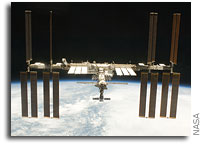
ISS On-Orbit Status 08/22/12
All ISS systems continue to function nominally, except those noted previously or below.
At wakeup, CDR Padalka performed the routine inspection of the SM PSS Caution & Warning panel as part of regular Daily Morning Inspection.
Upon wakeup, FE-5 Sunita Williams & FE-6 Akihiko Hoshide completed their currently daily post-sleep session of the Reaction Self-Test (Psychomotor Vigilance Self-Test on the ISS) protocol, their 13th. [RST is done twice daily (after wakeup & before bedtime) for 3 days prior to the sleep shift, the day(s) of the sleep shift and 5 days following a sleep shift. The experiment consists of a 5-minute reaction time task that allows crewmembers to monitor the daily effects of fatigue on performance while on ISS. The experiment provides objective feedback on neurobehavioral changes in attention, psychomotor speed, state stability, and impulsivity while on ISS missions, particularly as they relate to changes in circadian rhythms, sleep restrictions, and extended work shifts.]
Padalka completed the periodic maintenance of the active Russian BMP (Harmful Impurities Removal System) by starting the “bake-out” cycle to vacuum on absorbent bed #1 of the regenerable dual-channel filtration system. The process will be terminated at ~5:15pm EDT. Bed #2 regeneration will be done tomorrow. [Regeneration of each of the two cartridges takes about 12 hours and is conducted only during crew awake periods. The BMP’s regeneration cycle, normally done every 20 days, is currently performed four times more frequently (last time: 7/30 & 7/31.]
The CDR also cleaned up after yesterday’s highly successful EVA-31 by removing the empty portable O2 repress tank (BNP) #3 from the SM RO work compartment and stowing it in the BO Orbital Module of Soyuz 31S along with 3 IPK-1M gas masks.
Joined by Yuri Malenchenko for assistance, Gennady next set up the Orlan-MK suits and BSS interface units for stowage and collected EVA equipment including used items for disposal. [The clean-up involved BK-3 oxygen bottles, LP-9 absorber cartridges, the USZ (ORU) kit with VO separator, FOR-4, BOS-1 & IK filters and UdP drink containers, BK-10 underwear, MAGs, socks, 5PT containers, the ZIP-2M kit with the GP-10KM gloves, and the Orlan-MK suits.]
Later, in the DC1 Yuri set up the first Orlan 825M3 battery pack for discharging and started the process.
After FE-2 Revin had performed the standard one-hour leak check on the interface of Progress M-16M/48P (No. 416) and DC1, he and Malenchenko opened the two transfer hatches between the DC1 and 48P.
Next, Sergei inspected & photographed the hatch seal of the 48P external ASA active docking assembly for subsequent downlink, deactivated the cargo ship and installed the air duct between it and the DC1 Docking Compartment.
In the MRM1 Rassvet module, FE-2 serviced the RS (Russian Segment) radiation payload suite “Matryoshka-R” (RBO-3-2), verifying proper function of the deployed radiation detectors by taking readings and checking date/time from the LULIN-5 electronics box located near the spherical “phantom”, then replacing the dosimeters. The completed registration document was loaded on the RSS2 laptop for transmittal through the high-speed RSPI Data Transmission Radio Link or transferred to Earth through OCA. [A total of eight Bubble dosimeter detectors (dosimeters (A41, A42, A43, A44, A45, A46, A47, A48) are deployed in the RS. The complex Matryoshka payload suite is designed for sophisticated radiation studies.]
Afterwards, Sergei took documentary photography of the running educational experiment OBR-1-2/Fizika-Obrazovaniye, currently featuring the “Physics-Phase” (FAZA) demo, initiated on 8/14. [Obrazovaniye (Education) is a suite of three educational demonstrations of physics in micro-G, viz., OBR-1-1/”Fizika-LT” (Motion), OBR-1-2/”Fizika-Faza” (Phase) and OBR-1-3/”Fizika-Otolit”. The current “FAZA” demo studies a complete gas-liquid phase separation of fine dispersion particles in micro-G with diffusion and surface tension of the fluid. The experiment is conducted over 7-10 days, documented with photography once a day.]
FE-3 Acaba underwent his 4th session with the US PFE (Periodic Fitness Evaluation) protocol as subject, a monthly 1.5-hr. procedure which checks up on BP (blood pressure) & ECG (electrocardiogram) during programmed exercise on the CEVIS cycle ergometer in the US Lab. Readings were taken with BP/ECG equipment and the HRM (heart rate monitor) watch with its radio transmitter. Aki Hoshide assisted as Operator/CMO (Crew Medical Officer). The BP/ECG recordings were later transferred from the MEC (Medical Equipment Computer) via USB thumb drive to an SSC (Station Support Computer) laptop for downlink to the ground. [BP/ECG provides automated noninvasive systolic and diastolic blood pressure measurements while also monitoring and displaying accurate heart rates on a continual basis at rest and during exercise.]
Acaba also worked on the CSA BCAT (Canadian Space Agency Binary Colloidal Alloy Test)-C1 experiment, correcting the photographic setup per ground instruction, then initializing and photographing the SFU (Simon Fraser University) sample. [Joe mixed (homogenized) the SFU cuvette sample 2 for 25 minutes and photographed it for subsequent image transfer to SSC (Station Support Computer), then set the camera intervalometer (10 min. & 48 intervals, i.e. 8 hrs run; about 7-8 hrs later, Joe changed the intervalometer setting to 1 hr & 120 intervals). Major differences to other BCATs are specific flash angle, increased lens-to-SGM distance, and the freedom to use the focus adjustment ring.]
After reviewing Robonaut procedures and instructional video, Joe supported today’s activities with the first “human-like” robot in space, first setting up the Node-2 camcorder & MPC (Multi-Protocol Converter) for Lab site coverage, then deploying and attaching the Robonaut Taskboard for today, installing Robonaut at the P2 seat track location and cabling it in preparation for the subsequent powered/ground-commanded operations. Afterwards, Joe powered the robot down. Its script left it in Stow Pose prior to disassembly. [For the remote-commanding from the ground, Acaba prepared the Taskboard by positioning its Fluid Quick Disconnect Valve (BO1) tether so that Robonaut had unobstructed access to Toggle Valve (BO2) and Metering Valve (BO3), rotating BO2 to “1”, ensuring that BO3 was not up against a hard stop, and rotating Needle Valve (BO4) clockwise until it stopped.]
FE-5 Williams had an hour set aside for returning the US tools/equipment used during the Russian EVA-31 to their stowage sites.
Afterwards, Sunita & Akihiko joined for several hours of configuring tools, hardware & container bags required for the US EVA-18 on 8/30. [Activities included removal of all D-ring extenders on EMUs (Extravehicular Mobility Units) 3011 & 3015 for stowage and replacing them with pre-inspected tethers, stowing/retrieving equipment as per uplinked tables, removing cover from JTVE (JEM Television Equipment) camera and stow the latter in a large bag, taping the “Bunny Ears” headphones per crew preference, etc.]
In the JAXA JPM (JEM Pressurized Module), Hoshide reconfigured the MMA MLT2 (Microgravity Measurement Apparatus Laptop Terminal 2) Ethernet cable after disconnecting it from PLT2 (Payload Laptop Terminal 2).
Aki also supported JAXA in servicing the JEMRMS (JEM Robotic Manipulator System) by turning on and confirming activation of its RLT (Robotics Laptop) and RMS Monitor for the ground to upload a file to the SSEDSU semiconductor memory unit in the JEMRMS console, then deactivating the RLT.
In COL (Columbus Orbital Laboratory), FE-6 Hoshide later broke out and partially configured the PPFS (Portable Pulmonary Function System) hardware for his 2nd session with the Sprint VO2max assessment (Evaluation of Maximal Oxygen Uptake & Submaximal Estimates of VO2max before, during and after long-duration space station missions), scheduled tomorrow. [The experiment Sprint VO2max uses the PPFS, CEVIS ergometer cycle with vibration isolation, PFS (Pulmonary Function System) gas cylinders and mixing bag system, plus multiple other pieces of hardware to measure oxygen uptake, cardiac output, and more. Sprint VO2max is a test that measures oxygen uptake, ventilatory threshold, and other physiological parameters for evaluation of Sprint exercise prescription. The in-flight exercise protocol consists of multiple stages. Both the VO2max and Sprint experiments require monthly max tests in-flight, but each use a different protocol to obtain the data. Joint VO2max/Sprint subjects use the VO2max protocol. Suni is performing the VO2max protocol, Aki the Sprint Max protocol. Suni is the last VO2max subject. Aki is the first Sprint subject not also participating in VO2max. The Sprint protocol requires less Portable PFS accessory hardware than the VO2max protocol. However, for consistency, both crew will complete the full hardware setup.]
At about 12:20pm EDT, Aki Hoshide concluded his 2nd ICV (Integrated Cardiovascular) Ambulatory Monitoring session, doffing the two Actiwatches and HM2 (Holter Monitor 2) about 24 hrs after the end of yesterday’s “midpoint” activity (~12:30pm), then powered on the laptop and downloaded the data from the two Actiwatch Spectrums, copied the data from the 2 HM2 HiFi CF Cards to the HRF PC and downloaded Cardiopres data. [For the ICV Ambulatory Monitoring session, during the first 24 hrs (while all devices are worn), ten minutes of quiet, resting breathing are timelined to collect data for a specific analysis. The nominal exercise includes at least 10 minutes at a heart rate ≥120 bpm (beats per minute). After 24 hrs, the Cardiopres/BP is doffed and the HM2 HiFi CF Card and AA Battery are changed out to allow continuation of the session for another 24 hours, with the Makita batteries switched as required. After data collection is complete, the Actiwatches and both HM2 HiFi CF Cards are downloaded to the HRF PC1, while Cardiopres data are downloaded to the EPM (European Physiology Module) Rack and transferred to the HRF PC1 via a USB key for downlink.]
FE-2 Revin performed the routine daily servicing of the SOZh system (Environment Control & Life Support System, ECLSS) in the SM. [Regular daily SOZh maintenance consists, among else, of checking the ASU toilet facilities, replacement of the KTO & KBO solid waste containers, replacement of EDV-SV waste water and EDV-U urine containers and filling EDV-SV, KOV (for Elektron), EDV-ZV & EDV on RP flow regulator.]
Sergei also took care of the daily IMS (Inventory Management System) maintenance from the discretionary “time permitting” task list, updating/editing its standard “delta file” including stowage locations, for the regular weekly automated export/import to its three databases on the ground (Houston, Moscow, Baikonur).
CDR Padalka started his 3rd session of the standard 24-hour ECG (electrocardiogram) recording under the Russian MedOps PZE MO-2-2 protocol which monitors human cardiovascular performance in the space flight environment. [After 24 hrs of ECG recording and blood pressure measurements with the Kardiomed (CDM) system, Gennady will doff the five-electrode Holter harness that read his dynamic (in motion) heart function from two leads and recorded on the “Kardioregistrator 90205” unit. The examination results will then be downloaded from the Holter ECG device to the RSE-Med laptop, controlled by the Kardiomed application. Later, the data will be downlinked as a compressed .zip-file via OCA.]
Acaba performed the periodic maintenance of the ARED advanced resistive exercise machine of evacuating its cylinder flywheels to reestablish proper vacuum condition & sensor calibration.
In the US Lab, Joe reconfigured two UOPs (Utility Outlet Panels) by swapping the single-cable power feeds of the OCA Router and OCA NIU (Network Interface Unit).
At ~4:15am, Aki conducted the weekly JAXA crew conference via phone with staff at SSIPC (Space Station Integration & Promotion Center) at Tsukuba, Japan.
At ~10:10am EDT, Padalka & Malenchenko conducted a one-hour tagup with spacewalk specialists for an EVA-31 debrief. The teleconference was briefly interrupted by expected S-band LOS (Loss of Signal) from 10:28am-10:32am.
At ~12:28pm, the three Russian crewmembers conducted a ham radio session with the participants of the International Exhibition and Conference on Innovative Information and Communication Technologies in Space Research “PeRuSAT-2012” at the National Engineering University (UNI), Lima and Cusco, Peru. [Based at the Peruvian National University of Engineering in Lima, the amateur radio ground station communication system was established in 2010. Teachers and students have conducted since several successful sessions with ISS.]
At ~12:45pm, Joe & Sunita supported a PAO TV event set up by NASA especially for Social Media, located at KSC and on Twitter via telephone.
At ~2:20pm, Acaba, Williams & Hoshide were scheduled for a teleconference with EVA-18 specialists at MCC-Houston to discuss the upcoming spacewalk on 8/30.
Suni & Joe had a time slot/placeholder reserved each for making entries in their electronic Journals on the personal SSC. [Required are three journaling sessions per week. Today, Suni was to fill out her mid-increment questionnaire instead of the normal Journal activity.]
FE-2 & FE-6 conducted their regular weekly PMCs (Private Medical Conferences) via S- & Ku-band audio/video, Joe at ~10:15am, Aki at ~2:05pm.
Gennady & Sergei received an introduction to the use of the T2/COLBERT treadmill and observed Sunita Williams’ workout run on the machine. [New crewmembers receive training from experienced crew on the use of the exercise equipment – one session for each apparatus.]
The crew worked out on the CEVIS cycle ergometer with vibration isolation (FE-3), TVIS treadmill with vibration isolation & stabilization (CDR, FE-2, FE-4), ARED advanced resistive exercise device (CDR, FE-3, FE-5, FE-6), T2/COLBERT advanced treadmill (FE-5, FE-6), and VELO ergometer bike with load trainer (FE-2, FE-4). [FE-6 & FE-5 are on the special experimental SPRINT protocol which diverts from the regular 2.5 hrs per day exercise regime and introduces special daily sessions involving resistive and aerobic (interval & continuous) exercise, followed by a USND (Ultrasound) leg muscle self scan in COL. No exercise is being timelined for Friday. If any day is not completed, Suni picks up where she left off, i.e., she would be finishing out the week with the last day of exercise on her off day. Today, her SPRINT exercise continued with ARED/T2, with T2 (Kinematics, 2 min) following tomorrow, while Aki is scheduled for SPRINT VO2max..]
Plaque Hanging: At 3:30pm EDT, the traditional official plaque hanging will take place in ISS Mission Control/Houston for the Inc-31 Plaque with crew participation.
ISS/ATV Reboosts: This morning, the ISS successfully performed two successive reboosts using the ATV3 OCS (Orbit Correction System) thrusters, the first at 5:45am EDT (burn duration: 6 min 21 sec; delta-V: 0.91 m/sec; delta-h: 1.61 km), the second at 9:17am (34 min 15 sec; delta-V: 4.92 m/sec; delta-h: 8.58 km). After the 2nd burn, ISS was at 416.43 km mean altitude, with 427.0 km apogee height and 405.85 km perigee height. ISS attitude control authority was handed over to Russian MCS (Motion Control System) at ~4:00am for ATV control in TEA (Torque Equilibrium Attitude) and was returned to US CMG momentum management at ~10:35am. Purpose of the reboosts was to set up the phasing conditions for the Soyuz 30S landing on 9/16 and Progress 49P accelerated (4-orbit) rendezvous on 10/31.
CEO (Crew Earth Observation) targets uplinked for today were Rio de Janeiro, Brazil (looking left for Guanabara Bay, the major visual cue, with Rio de Janeiro situated on its southern shore. Rio’s airport is located on the island within the bay. Imaging opportunity exists between cloud masses), Mount Vesuvius, Italy (looking just left for this volcano at the head of Naples Bay. This 4,203 ft stratovolcano of ancient Pompeii fame remains a threat to the nearby city of Naples), Podgorica, Montenegro (CAPITAL CITY COLLECTION. Looking right of track for Podgorica, near the coast of the Adriatic Sea just north of large Lake Scutari. Podgorica is the capital and largest city [pop. 136,000] of Montenegro), Sarajevo, Bosnia and Herzegovina (CAPITAL CITY COLLECTION. Looking left for this city of 311,000. The city itself appears as a bright patch within the forested mountains), Pilcomayo River Fan, Argentina-Paraguay (the crew was asked to shoot right of track to capture the most recent changes in this fast changing river. The Pilcomayo River has built up the largest sediment fan on Earth [radius of 705 km from apex to toe] and occupies most of western Paraguay. It is an analog for newly identified features on Mars. The Pilcomayo River itself is highly variable: requested are images of the river in specific zones), Cordillera Blanca Glaciers, Peru (status of small ice fields on the peaks of several volcanoes is best documented by ISS CEO imagery. If the crew aimed for mapping swaths left and right of track as it crossed the western Andean mountain crest, they were able to capture the ice fields), and Central Cuba coastal vegetation (looking left and right of track and shooting overlapping images along the south coast to document the extensive coastal mangroves and other natural vegetation).
Significant Events Ahead (all dates Eastern Time and subject to change):
————–Six-crew operations—————-
08/30/12 — US EVA-18
09/06/12 — HTV3 undocking
09/08/12 — HTV3 reentry
09/16/12 — Soyuz TMA-04M/30S undock/landing – 5:56pm/9:20pm
(End of Increment 32)
————–Three-crew operations————-
09/25/12 — ATV3 undocking
10/15/12 — Soyuz TMA-06M/32S launch – K.Ford (CDR-34)/O.Novitsky/E.Tarelkin
10/17/12 — Soyuz TMA-06M/32S docking
————–Six-crew operations————-
11/01/12 — Progress M-17M/49P launch
11/03/12 — Progress M-17M/49P docking
11/12/12 — Soyuz TMA-05M/31S undock/landing (End of Increment 33)
————–Three-crew operations————-
12/05/12 — Soyuz TMA-07M/33S launch – C.Hadfield (CDR-35)/T.Mashburn/R.Romanenko
12/07/12 — Soyuz TMA-07M/33S docking
————–Six-crew operations————-
12/25/12 — Progress M-16M/48P undocking
12/26/12 — Progress M-18M/50P launch
12/28/12 — Progress M-18M/50P docking
03/19/13 — Soyuz TMA-06M/32S undock/landing (End of Increment 34)
————–Three-crew operations————-
04/02/13 — Soyuz TMA-08M/34S launch – P.Vinogradov (CDR-36)/C.Cassidy/A.Misurkin
04/04/13 — Soyuz TMA-08M/34S docking
————–Six-crew operations————-
05/16/13 — Soyuz TMA-07M/33S undock/landing (End of Increment 35)
————–Three-crew operations————-
05/29/13 — Soyuz TMA-09M/35S launch – M.Suraev (CDR-37)/K.Nyberg/L.Parmitano
05/31/13 — Soyuz TMA-09M/35S docking
————–Six-crew operations————-
09/xx/13 — Soyuz TMA-08M/34S undock/landing (End of Increment 36)
————–Three-crew operations————-
09/xx/13 — Soyuz TMA-10M/36S launch – M.Hopkins/TBD (CDR-38)/TBD
09/xx/13 — Soyuz TMA-10M/36S docking
————–Six-crew operations————-
11/xx/13 — Soyuz TMA-09M/35S undock/landing (End of Increment 37)
————–Three-crew operations————-
11/xx/13 — Soyuz TMA-11M/37S launch – K.Wakata (CDR-39)/R.Mastracchio/TBD
11/xx/13 — Soyuz TMA-11M/37S docking
————–Six-crew operations————-
03/xx/14 — Soyuz TMA-10M/36S undock/landing (End of Increment 38)
————–Three-crew operations————-



