NASA ISS On-Orbit Status 25 February 2012
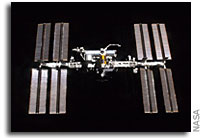
All ISS systems continue to function nominally, except those noted previously or below. Saturday – Crew off duty.
After breakfast, FE-2 Ivanishin performed the routine inspection of the SM (Service Module) PSS Caution & Warning panel as part of regular Daily Morning Inspection.
FE-5 Kuipers continued his 3rd (FD60) Pro K session with Day 3 for a 5-day period, with diet logging after the urine pH spot test. After recording his diet input today, Andre broke out and set up the equipment for the associated urine collections tomorrow (2/26). Blood sampling will follow on Monday (2/27). [For Pro K, there are five in-flight sessions (FD15, FD370, FD60, FD120, FD180) of samplings, to be shared with the NUTRITION w/Repository protocol, each one with five days of diet & urine pH logging and photography on the last day (science sessions are often referred to by Flight Day 15, 30, 60, etc. However, there are plus/minus windows associated with these time points so a “Flight Day 15” science session may not actually fall on the crewmember’s 15th day on-orbit). The crewmember prepares a diet log and then annotates quantities of food packets consumed and supplements taken. On Days 4 & 5, urine collections are spread over 24 hrs; samples go into the MELFI (Minus Eighty Laboratory Freezer for ISS) within 30 min after collection. Blood samples, on the last day, are centrifuged in the RC (Refrigerated Centrifuge) and placed in MELFI at -80 degC. There is an 8-hr fasting requirement prior to the blood draw (i.e., no food or drink, but water ingestion is encouraged). MELFI constraints: Maximum MELFI Dewar open time: 60 sec; at least 45 min between MELFI dewar door openings.]
Dan Burbank conducted the regular (~weekly) inspection & maintenance, as required, of the CGBA-4 (Commercial Generic Bioprocessing Apparatus 4) and CGBA-5 payloads in their ERs (EXPRESS Racks) at Lab O2 & O1, focusing on cleaning the muffler air intakes. [Crew note from Dan: “Good status checks; both units have incrementing GMT and temps (set and actual) match.”]
CDR Burbank, FE-1 Shkaplerov, FE-2 Ivanishin, FE-4 Kononenko, FE-5 Kuipers & FE-6 Pettit joined in conducting the regular weekly three-hour task of thorough cleaning of their home, including COL (Columbus Orbital Laboratory) and Kibo JPM. [“Uborka”, usually done on Saturdays, includes removal of food waste products, cleaning of compartments with vacuum cleaner, damp cleaning of the SM (Service Module) dining table, other frequently touched surfaces and surfaces where trash is collected, as well as the sleep stations with a standard cleaning solution; also, fan screens and grilles are cleaned to avoid temperature rises. Special cleaning is also done every 90 days on the HEPA (high-efficiency particulate air) bacteria filters in the Lab.]
As part of Uborka house cleaning, Anton, Anatoly & Oleg completed regular weekly maintenance inspection & cleaning of fan screens in the FGB (TsV2) plus Group E fan grilles in the SM (VPkhO, FS5, FS6, VP).
Also as part of uborka, FE-6 Pettit used the vacuum cleaner to remove any dust and debris from the vents of the OpsLAN Server T61p SSCs (Station Support Computers) located in Lab bay O1 (LS1 & ISS-SERVER1) to ensure their optimal performance.
Anatoly Ivanishin checked the KOB2 cooling loop in the SM, at a liquid connector on the 4SPN2 panel for coolant leaks. [In case there were any large droplets (10-20 cm3), FE-2 was to report to TsUP-Moscow.]
Oleg Kononenko meanwhile performed the routine daily servicing of the SOZh system (Environment Control & Life Support System, ECLSS) in the SM. [Regular daily SOZh maintenance consists, among else, of checking the ASU toilet facilities, replacement of the KTO & KBO solid waste containers, replacement of EDV-SV waste water and EDV-U urine containers and filling EDV-SV, KOV (for Elektron), EDV-ZV & EDV on RP flow regulator.]
Dan Burbank took the (approx.) monthly O-OHA (On-Orbit Hearing Assessment) test, his 3rd, a 30-min NASA environmental health systems examination to assess the efficacy of acoustic countermeasures, using a special software application on the MEC (Medical Equipment Computer) laptop. [The O-OHA audiography test involves minimum audibility measurements for each ear over a wide range of frequencies (0.25-10 kHz) and sound pressure levels, with the crewmembers using individual-specific Prophonics earphones, new Bose ANC headsets (delivered on 30P) and the SLM (sound level meter). To conduct the testing, the experimenter is supported by special EarQ software on the MEC, featuring an up/down-arrow-operated slider for each test frequency that the crewmember moves to the lowest sound pressure level at which the tone can still be heard. The baseline test is required not later than about Flight Day 14 for each new Expedition and is then generally performed once per month. Note: There has been temporary hearing deficits documented on some U.S. and Russian crewmembers, all of which recovered to pre-mission levels.]
Dan & Andre filled out their weekly FFQs (Food Frequency Questionnaires) on the MEC (Medical Equipment Computer), Dan’s 13h, Andre’s 7th. [On the FFQs, USOS astronauts keep a personalized log of their nutritional intake over time on special MEC software. Recorded are the amounts consumed during the past week of such food items as beverages, cereals, grains, eggs, breads, snacks, sweets, fruit, beans, soup, vegetables, dairy, fish, meat, chicken, sauces & spreads, and vitamins. The FFQ is performed once a week to estimate nutrient intake from the previous week and to give recommendations to ground specialists that help maintain optimal crew health. Weekly estimation has been verified to be reliable enough that nutrients do not need to be tracked daily.]
The CDR had another time slot reserved for making entries in his electronic Journal on the personal SSC. [Required are three journaling sessions per week.]
At ~7:35am EST, the six crewmembers held the regular WPC (Weekly Planning Conference) with the ground, discussing next week’s “Look-Ahead Plan” (prepared jointly by MCC-H and TsUP-Moscow timeline planners), via S-band/audio, reviewing upcoming activities and any concerns about future on-orbit events.
FE-1, FE-2 & FE-4 conducted their weekly PFCs (Private Family Conferences), via S-band/audio and Ku-band/MS-NetMeeting application (which displays the uplinked ground video on an SSC laptop), Anton at ~5:10am, Anatoly at ~6:45am, Oleg at ~9:05am EST.
The crew worked out with their regular 2-hr physical exercise protocol on the CEVIS cycled ergometer with vibration isolation (FE-5), TVIS treadmill with vibration isolation & stabilization (FE-1, FE-2, FE-4), ARED advanced resistive exerciser (CDR, FE-4, FE-5, FE-6), T2/COLBERT advanced treadmill (CDR, FE-6), and VELO ergometer bike with load trainer (FE-1, FE-2). [FE-6 is on the special experimental SPRINT protocol which diverts from the regular 2.5 hrs per day exercise regime and introduces special daily sessions, followed by a USND leg muscle self scan in COL. Today’s exercise called for ARED+T2, with CEVIS, ARED+T2, T2, ARED+T2, CEVIS following in the next 4 days. No exercise is being timelined for Fridays. If any day is not completed, Don picks up where he left off, i.e., he would be finishing out the week with his last day of exercise on his off day.]
Weekly Science Update (Expedition Thirty/Thirty-One — Week 23).
2D NANO Template (JAXA): The experiment is continuing in Dewar 4 of MELFI-1. The samples are proceeding by arranging peptides slowly on base plates. The samples will be returned on 28S.
3D SPACE: Complete.
AgCam (Agricultural Camera): No report.
ALTCRISS (Alteino Long Term monitoring of Cosmic Rays on the ISS): Complete.
ALTEA SHIELD (NASA/ASI): No report.
Amine Swingbed (NASA): No report.
AMS-02 (Alpha Magnetic Spectrometer): AMS Payload and Laptop operations are nominal. The March 2012 high negative beta thermal mitigation plan for AMS, as documented in CHIT10217, is being reviewed.
APEX (Advanced Plant Experiments on Orbit) -Cambium: No report.
APEX-TAGES (Transgenic Arabidopsis Gene Expression System): No report.
Asian Seed 2010 (JAXA): Returned on ULF6.
BCAT-6 (Binary Colloidal Alloy Test 6): Sample 4 ran from 2/8 – 2/22. The latest images in the sequence do not appear to have any of the particular phase separation, called spinodal decomposition, that we saw in the other samples. We will be looking into the complete set of data. Having a BCAT sample that is at or beyond the critical point actually sets a boundary in the phase diagram for the Harvard BCAT samples; this is exciting from a science perspective. [Colloids are particles as small as a few tens of nanometers (a thousandth of a thousandth of a millimeter) that are suspended in a medium, usually a liquid or a gas. The name “colloid” comes from the Greek word for “glue”, and expresses very important properties of colloids: when small and light enough, particles can be influenced in their behavior by forces of electromagnetic origin, and make them stick together, or repel each other depending on the configuration. Colloids are widely studied in science because the forces between particles can be controlled and tuned and because particles, while being small enough to be influenced by such forces, are big and slow enough to be seen with a relatively simple and inexpensive laboratory instrument like a microscope. This is why colloids are often studied as model for molecular systems (like standard gases or liquids) where molecules, the individual constituents, are much smaller than colloids and cannot be seen with light. As mentioned, forces between colloids can be tuned giving rise to a rich variety of phenomena. One of them is aggregation, which is when particles stick together and tend to form structures. Among the many ways to induce particle aggregation, one allows to do so by controlling the temperature of the solution in which the particles are immersed, thanks to very weak forces called “critical Casimir forces” that have been predicted more than 30 years ago but just partially verified in experiments. The objective of SODI COLLOID is to measure such forces and produce a controlled aggregation of tiny plastic particles. This would allow to shed light on critical Casimir forces and to make a step towards the fabrication of new nanostructured materials with remarkable optical properties for industrial applications.]
BIOLAB (ESA): No report.
BIORHYTHMS (JAXA, Biological Rhythms): No report.
BISE (CSA, Bodies in the Space Environment): No report.
BISPHOSPHONATES: No report.
BXF-Facility (Boiling eXperiment Facility, NASA): No report.
BXF-MABE (Microheater Array Boiling Experiment, NASA): No report.
BXF-NPBX (Pool Boiling Experiment, NASA): No report.
CARD (Long Term Microgravity Model for Investigating Mechanisms of Heart Disease, ESA): “Thanks Andre for completing the CARD kits consolidation. Much appreciated!”
CARDIOCOG-2: Complete.
CB (JAXA Clean Bench): No report.
CBEF-2 (JAXA Cell Biology Experiment Facility)/SPACE SEED: No report.
CCISS (Cardiovascular & Cerebrovascular Control on Return from ISS): No report.
CERISE (JAXA): No report.
CCF (Capillary Channel Flow, NASA): No report.
CFE-2 (Capillary Flow Experiment 2, NASA): “Don: Today (2/23) you conducted a full 360* CCW rotation of the vane for the CFE Vane Gap-2 vessel. The purpose of the test was to check for any hysteresis in the critical angles compared to the CW test you performed back in Jan (1/16). You were able to complete all operations in great time and with good precision. Also, the excellent image quality was made possible by your choice of a longer working distance (we’re guessing 10ft?) with the ISS HD camcorder. This view should nearly eliminate the keystone effect and greatly increases the depth of field. Thanks for picking up on our scientific terminology, reducing the need to report up specific vane angles, but rather specific fluid response effects, i.e. “search for the serrated gap de-wetting condition”. Your detailed description of the filled perforations after the vane de-wetted shows that wetting events leave perforations filled for VG2. This did NOT happen for VG1. Finally, when Mark says he is tracking a test point on those SLOW wetting events, we are literally sticking a Post-It note on the video monitor(s) down here on the ground, and marking with pen/pencil incremental points on the note to see if the fluid is still moving (pretty geeky, huh?).”
CFS-A (Colored Fungi in Space-A, ESA): No report.
CSI-5/CGBA-5 (CGBA Science Insert #5/Commercial Generic Bioprocessing Apparatus 5): No report.
CGBA-2 (Commercial Generic Bioprocessing Apparatus 2): Complete.
CIR (Combustion Integrated Rack), MDCA/Flex: No report.
Commercial (Inc 23&24, JAXA): No report.
Commercial (Inc 25 & 26, JAXA): No report.
CSAC (Chip-Scale Atomic Clock, SPHERES): “Don, thanks for getting the Clocks setup on ER2. The photos look great. We’re looking forward to integrating the CSAC with the satellites and checking things out in a few weeks.”
CSLM-2 (Coarsening in Solid-Liquid Mixtures 2): No report.
CsPins (JAXA): No report.
CubeLab: No report.
CW/CR (Cell Wall/Resist Wall) in EMCS (European Modular Cultivation System): Complete.
DECLIC-ALI (Device for the Study of Critical Liquids & Crystallization-ALICE-like, CNES/NASA): No report.
DomeGene (JAXA): Complete.
DOSIS (Dose Distribution Inside ISS, ESA): No report.
EarthKAM (Earth Knowledge Acquired by Middle School Students): No report.
EDR (European Drawer Rack, ESA): The EDR Rack was activated on 2/3 to support ERB-2 file downlink.
EKE (Endurance Capacity by Gas Exchange and Heart Rate Kinetics During Physical Training, ESA): No report.
ELITE-S2 (Elaboratore Immagini Televisive – Space 2): Planned.
EMCS (European Modular Cultivation System): No report.
ENose (Electronic Nose): No report.
EPM (European Physiology Module): No report.
EPO (Educational Payload Operations, NASA) (Eye in the Sky; Sleep 2): No report.
EPO (Educational Payload Operations, NASA) (Sesame Street): No report.
EPO (Educational Payload Operations, NASA) (Kids in Micro-G): No report.
EPO (Educational Payload Operations, NASA) (Earth/Moon/Mars Demo): No report.
EPO (Educational Payload Operations, NASA) (Space Sports): No report.
EPO (Educational Payload Operations, NASA) (ISS Orbit): No report.
EPO CONVECTIONS (ESA): “No report.
EPO MISSION X (ESA): No report.
EPO LES-2 (ESA): No report.
EPO GREENHOUSE (ESA): No report.
EPO 3-min Video (JAXA): No report.
EPO J-Astro Report (JAXA): No report.
EPO Dewey’s Forest (JAXA): Closed out on 3/15.
EPO Space Clothes (JAXA): Complete.
EPO Hiten (Dance, JAXA): No report.
EPO Lego Bricks (NASA, JAXA): No report.
EPO Moon Score (JAXA): No report.
EPO Kibo Kids Tour (JAXA): Complete.
EPO Paper Craft (Origami, JAXA): No report.
EPO Poem (JAXA): No report.
EPO-5 SpaceBottle (Message in a Bottle, JAXA): No report.
EPO-6 Spiral Top 2 (JAXA): No report.
EPO-7 Doctor Demo (JAXA): No report.
EPO-7 Green Tea Preparation (JAXA): No report.
EPO-7 Ink Ball (JAXA): No report.
EPO-7 Video (JAXA):
EPO-7 Try Zero-G (JAXA): No report.
EPO-8 Space Sakura (JAXA): No report.
EPO-8 Space Musical Instruments (JAXA): No report.
ERB-2 (Erasmus Recording Binocular, ESA): [ERB-2 aims are to develop narrated video material for various PR & educational products & events, including a 3D interior station view.] “Andre, we think you have already or will soon receive more detailed feedback on ERB-2 footage. Here’s a short summary: So far about 1/3 of the images were received and decoded. The efforts are hugely appreciated! The fly-through clips are of good quality; the work-out in the treadmill in Node3 was a very good and very sharp shot. The shots outside from the cupola are in principle ok, but there would be more technical feedback provided. Great content all-over, thank you!”
ETD (Eye Tracking Device): Completed.
FACET-2 (JAXA): No report.
FERULATE (JAXA): No report.
FIR/LMM/CVB (Fluids Integrated Rack / Light Microscopy Module / Constrained Vapor Bubble): No report.
Fish Scales (JAXA): Completed on FD7/ULF-4 and returned on STS-132.
FOAM STABILITY EPO (ESA): No report.
FOCUS: No report.
FSL (Fluid Science Laboratory, ESA): No report.
FWED (Flywheel Exercise Device, ESA): No report.
GENARA-A (Gravity Regulated Genes in Arabidopsis A/ESA): No report.
GEOFLOW-2 (ESA): GEOFLOW-2 no-rotations science runs performed in week#22. A couple of the scientific setpoints were skipped due to the PID control and some thermal gradient deviations were observed, but runs could be mostly completed and are continuing. During the current week#23, data transfer and downlink were performed on 2/20-2/21. Standing down on 2/22-2/23 due to COL CFA (Cabin Fan Assembly) activities. [Background: Everybody is familiar with liquids. In an average day we get to use, handle or drink water or other liquids. And everybody knows how fluids (that is liquids and gases) behave: when subjected to a net force, may be pressure, a temperature difference or gravity, they can move freely. Scientists have been studying how fluids move for centuries, and managed to write mathematical formulas that can describe and predict such movements. Unfortunately, these equations are extremely complex and only approximate solutions are known. As a result, our quantitative understanding of fluid movement is just partial. This is especially true for natural phenomena where the forces can be enormous and unpredictable, like in oceans or in the atmosphere. Or the interior of the earth, where rocks are exposed to pressures and temperatures so incredibly high that they slowly move and adapt their shape. That is, over hundreds of years rocks flow just like a very viscous liquid. Scientists try to study such flows but cannot observe them directly due to the fact that they take place deep beneath the surface of our planet. The only way is to have computers simulating those movements starting from the equations, but how to check whether computers are correct? This is what Geoflow II is trying to answer on board the International Space Station. Geoflow II is a miniature planet that has some of its essential ingredients: a fluid can freely move inside a spherical container that rotates, has temperature differences and has a simulated gravity directed towards the centre just like in a real planet. By taking pictures of the fluid movements, scientists are able to understand the essential characteristics of the flows and determine whether computer simulations are correct or whether they need to be refined and improved towards a better understanding of the elusive movements that take place inside our planet.]
HAIR (JAXA): No report.
HDTV System (JAXA): No report.
Hicari (JAXA): No report.
Holter ECG (JAXA): No report.
HQPC (JAXA): Was delivered by 34P.
HREP (HICO/Hyperspectral Imager for the Coastal Ocean & RAIDS/Remote Atmospheric & Ionospheric Detection System/JAXA): HICO has taken 5117 images to-date. The most recent HICO images include parts of Australia, some islands out in the Pacific Ocean and the Red Sea Straits. RAIDS is collecting secondary Science data including nighttime atmospheric disk photometry, spectra and temperatures. Extreme Ultra Violet airglow spectroscopy and optical contamination studies will also be performed.
HydroTropi (Hydrotropism & Auxin-Inducible Gene Expression in Roots Grown under Microgravity Conditions/JAXA): No report.
ICE CRYSTAL (JAXA): Complete.
ICV (Integrated Cardiovascular): No report.
IMMUNO (Neuroendocrine & Immune Responses in Humans During & After Long Term Stay at ISS): No report.
INTEGRATED IMMUNE: No report.
InSPACE-2 (Investigating the Structure of Paramagnetic Aggregates from Colloidal Emulsions 2): No report.
IRIS (Image Reversal in Space, CSA): No report.
ISS Amateur/Ham Radio: No report.
ISSAC (ISS Agricultural Camera, NASA): No report.
IV Gen (Intravenous Fluids Generation): No report.
JOURNALS (Behavioral Issues Associated with Isolation and Confinement, NASA): No report. [Studies conducted on Earth have shown that analyzing the content of journals and diaries is an effective method for identifying the issues that are most important to a person. The method is based on the reasonable assumption that the frequency that an issue or category of issues is mentioned in a journal reflects the importance of that issue or category to the writer. The tone of each entry (positive, negative, or neutral) and phase of the expedition also are variables of interest. Study results will lead to recommendations for the design of equipment, facilities, procedures, and training to help sustain behavioral adjustment and performance during long-duration space expeditions to the ISS, asteroids, the Moon, Mars, and beyond. Results from this study could help to improve the behavioral performance of people living and working under a variety of conditions here on Earth.]
KID/KUBIK6: No report.
KUBIK 3 (ESA): No report.
LMM/PACE-2 (Light Microscopy Module / Preliminary Advanced Colloids Experiment): No report.
LOCAD-PTS (Lab-on-a-Chip Application Development-Portable Test System): No report.
Marangoni Exp. (JAXA): No report.
Marangoni DSD – Dynamic Surf (JAXA): Payload name was change from Marangoni DSD to Dynamic Surf.
Marangoni UVP (JAXA): No report.
MARES (Muscle Atrophy Research & Exercise System, ESA/NASA): “Again big thanks for all the efforts on MARES. The teams on ground have been working on a further troubleshooting plan related to the Ethernet connection and the Y-direction friction values. The plan is being discussed in an Anomaly Resolution Team.”
Matryoshka-2 (RSA): No report.
MAXI (Monitor of All-sky X-ray Image, JAXA): Continuing telemetry monitoring.
MDCA/Flex-2: “Dan: Excellent job working with us to install the boot loader onto the MDCA Avionics Package on 2/20. We appreciate all your hard work and attention to detail during this task. Also, we appreciate the great camcorder views you gave us of the ELC monitor. We installed the boot loader onto the MDCA Avionics Package to fix its corrupted boot parameters. After you removed the MDCA Boot Selector on 2/21, we confirmed that the MDCA Avionics Package is functional! On 2/22, we resumed MDCA/FLEX-2 Fuel Surrogate test points. We performed four freely deployed test points in a standard air mixture of 21% oxygen and 79% nitrogen at 1 atm. All Fuel Surrogate test points will be performed in this same chamber environment. The test points used iso-octane fuel with droplet diameters of approximately 2.5 mm to 3 mm. Iso-octane is a pure fuel we are using to gather baseline data prior to investigating a bi-component mixture of iso-octane and heptane. The objective of these tests was to obtain repeated tests with complete burn histories that remained within the field of view of our cameras. This objective was not entirely met because the fuel droplets during the second and third tests drifted out of the field of view of our cameras before they extinguished. However, these tests still provide useful data. Also, the first test’s fuel droplet did not ignite, but this non-ignition test provides a useful benchmark for pure evaporation of a large iso-octane droplet in air.”
MEIS (Marangoni Experiment for ISS) in JAXA FPEF (Fluid Physics Experiment Facility): No report.
Microbe-2 (JAXA): Sample returned by ULF6.
Micro-G Clay (JAXA EPO): Complete.
MISSE-8 (Materials ISS Experiment 8): MISSE-8 re-enabled the SEUXSE II experiment on Day 48. All MISSE-8 experiments are nominal and the command strategy is still in place to help prevent any CIB resets this week. PASCAL is performing nominal commanding of its solar cells including induced discharge experiments and IV curves. IV curves are plots of the current versus voltage for solar cells and tell a lot about how these are performing. The SpaceCube experiment is running code for new radiation hardening by software.
MMA (JAXA/Microgravity Measurement Apparatus): No report.
MPAC/SEED (JAXA): No report.
MSG-SAME (Microgravity Science Glovebox-Smoke Aerosol Measurement Experiment): No report.
MSPR (Multi Purpose Small Payload Rack, JAXA): “Don, on 2/22, you completed the checkout of the QDs at the Combustion Chamber (CC), and inspected ten O-Rings using the otoscope. There were four suspected damaged or contaminated areas. Thank you for the precise work.”
MSL (Materials Science Laboratory, ESA): No report.
MTR-2 (Russian radiation measurements): Passive dosimeters measurements in DC-1 “Pirs”.
MULTIGEN-1: Completed.
MYCO 3 (JAXA): On 9/22, Mike and Satoshi completed sample collection.
MyoLab (JAXA): Completed on 4/20.
NANOSKELETON (Production of High Performance Nanomaterials in Microgravity, JAXA): No report.
NEURORAD (JAXA): No report.
NEUROSPAT (ESA/Study of Spatial Cognition, Novelty Processing and Sensorimotor Integration): “The data of your second session have been received on the ground. We are awaiting feedback from the science team, but from the data they saw during the session, they expect to have a very good set of science data.” [During microgravity stay, the human body goes through multitude of physiological changes in order to accommodate to the new environment. As the brain is a master organ where major crucial processes take place, it is fundamental to understand how it manages adaptation for living in Space. One of the main purposes of Neurospat (NES) experiment is to focus on how microgravity environment influences cerebral activity of astronauts aboard ISS. For this, the global electrical activity of the brain of the astronaut is measured thanks to electroencephalogram (EEG) technique, while he or she is executing specific tasks through a computer as if it was a kind of videogame. In practice, the astronaut is wearing a specially equipped cap with passive, gel filled electrodes that are in contact with his/her scalp while he or she is performing the specific tasks that we have designed. These are visual-orientation perception and visuo-motor tracking tasks that may be encountered on a daily basis. The tasks allow the study of 5 cognitive processes: Perception, Attention, Memorization, Decision and Action. Besides there are also task-irrelevant images that are showed to the astronaut in order to assess how well he or she processes novel visual stimuli. The electrodes all over the scalp are linked to sensitive amplifiers that allow us to measure small variations of electrical potential between different regions of the scalp. These signals are in turn used to estimate activity in the cerebral cortex related to the task being performed. Also, they serve to identify the mental processes associated with these tasks and to localize in the brain the sources of the underlying neural activity. After analysis of the data we can better understand whether the novel environment of microgravity accompanied by a multitude of stressors may place an increased load on the cognitive capacity of the human brain and whether the sensory signals and motor responses of astronauts are processed and interpreted differently because a new reference frame.]
NOA-1/-2 (Nitric Oxide Analyzer, ESA): Complete.
NUTRITION w/REPOSITORY/ProK: No report.
ODK (Onboard Diagnostic Kit, JAXA): No report.
PACE-2 (Preliminary Advanced Colloids Experiment 2, NASA): (please see under FIR and LMM/PACE-2.
PADIAC (Pathway Different Activators, ESA): No report.
PADLES (JAXA, Area PADLES 6/7; Passive Area Dosimeter for Lifescience Experiment in Space): No report.
PASSAGES (JAXA): No report.
PCDF-PU (Protein Crystallization Diagnostic Facility – Process Unit): No report.
PCG (JAXA, Protein Crystal Growth): Since 1/28, we are monitoring temperature until the day of the return of 28S.
PCRF (Protein Crystallization Research Facility) Reconfiguration (JAXA): See PCG.
PLSG (Plant Signaling, NASA/ESA): No report.
PMDIS (Perceptual Motor Deficits in Space): Complete.
POLCA/GRAVIGEN (ESA): Complete.
Portable PFS: Portable PFS data were recorded in support of the VO2max /THERMOLAB sessions for Andre on 2/7 and for Don on 2/8.
Pro K: No report.
RadGene & LOH (JAXA): Complete.
RadSilk (JAXA): No report.
Reaction Self Test (RST/Psychomotor Vigilance Self Test on the ISS): “Dan, Don and Andre, Thank you for your participation in Reaction Self Test!”
ROALD-2 (Role of Apoptosis in Lymphocyte Depression 2, ESA): No report. [Background: The ROALD-2 experiment studies how the function of T-cells from the immune system are affected by microgravity and spaceflight. T-cells play an important role in controlling the immune systems response to infection. It has previously been shown that the immune response of astronauts can be reduced following spaceflight and it has also been shown that the activation of T-cells in culture is reduced in microgravity. A series of experiments on T-cells and other immune system cells have been previously performed by different scientific teams on Space Shuttle and the ISS over the last 30 years. The data from these individual experiments provides information which together can be used to understand the mechanisms by which gravity or the absence of gravity can affect T-cell function.]
Robonaut (NASA): No report.
RYUTAI Rack (JAXA): No report.
SAIBO Rack (JAXA): Dan, on 1/21, you completed the microscope checkout for Clean Bench (CB). Thank you for conducting a part of the task during the Presleep. The CB function checkout was completed yesterday.
SAMS/MAMS (Space & Microgravity Acceleration Measurement Systems): No report.
SAMPLE: Complete.
SCOF (Solution Crystallization Observation Facility, JAXA): No report.
SEDA-AP (Space Environment Data Acquisition Equipment-Attached Payload, JAXA): Continuing telemetry monitoring.
SHD (Space Headaches, ESA): “Great! You keep on remembering your weekly questionnaire, Andre!” [Background: The neurologists from Leiden University want to study the question whether the astronauts, while in space, suffer from the headaches. With the help of simple questionnaires the astronauts will register the headache episodes and the eventual accompanying symptoms. The results will hopefully help to characterize the frequency and characteristics of space headache and to develop countermeasure to prevent/minimize headache occurrence during the space flight.]
SHERE II (Shear History Extensional Rheology Experiment II): No report.
SLAMMD (Space Linear Acceleration Mass Measurement Device): No report.
SLEEP (Sleep-Wake Actigraphy & Light Exposure during Spaceflight): No report.
SLICE (Structure & Liftoff In Combustion Experiment): Don, thanks for your efforts and skill in capturing images of the lifted flames. The microgravity flames have lifted at significantly greater velocities than the normal-gravity flames, but upon lifting have been much less stable. In the testing on 2/17, which was with 20% ethylene (diluted with nitrogen), a total of 8 tests were conducted, including some repeats, with 32 distinct flow conditions including two where the flame was detached from the burner tube. As of 2/23, a total of 27 standard tests (i.e., flames) were conducted including approximately 120 flow conditions. The SLICE fan calibrations have shown minor day-to-day variation, where the calibration conducted on 2/9 appears to be an outlier, and where the cause for the significantly higher flow readings on that day is unknown. The results from 2/9 are quite close to those obtained after the soot removal during the 2009 SPICE ops (on GMT 166), suggesting the possibility of a systematic cause. The agreement of the typical SLICE results with those from the end of the 2009 SPICE ops seems to support this idea, but both could be coincidences. Recent testing indicates that the higher flow readings from 2/9 are not the result of either (1) the Glovebox being open (i.e., where the glove ports are not sealed) or (2) the Glovebox air circulation being on. Much higher flow readings are observed when the front door of the SPICE experiment assembly is open, although that condition can lead to readings that significantly exceed those from 2/9. Next week’s testing includes more lifted flame tests with the 100% and 40% methane (diluted with nitrogen), but there will be a return to smoke point testing in future weeks.”
SMILES (JAXA): Continuing telemetry monitoring.
SODI/IVIDIL (Selectable Optical Diagnostics Instrument/Influence of Vibration on Diffusion in Liquids, ESA): No report.
SODI/COLLOID (Selectable Optical Diagnostics Instrument/Colloid): No report.
SODI-DSC (Selectable Optical Diagnostics Instrument/Diffusion & Soret Coefficient, ESA): No report. [Background: Fluids and gases are never at rest. This statement is in apparent contradiction with our experience: when we pour water in a glass and wait until all flows have disappeared and the temperature of the liquid is in equilibrium with that of the room, we see that water appears to be completely at rest. However, if we were able to see the individual molecules of water with a very powerful microscope, we would discover that they are incessantly moving and collide with each other following frantic, random paths even if the liquid appears to be quiescent at naked eye. Scientists are interested in observing and measuring such movements because they reveal important, practical information: how fast does heat propagates in a fluid? How fast do liquid mixtures mix? Such phenomena occur in absence of a macroscopic flow, that is when the fluid appears to be at rest, and are called heat and mass diffusion respectively. While the theoretical prediction of heat and mass diffusion is still quite challenging, its measurement is a standard laboratory practice, but may become extremely difficult or impossible when dealing with mixtures of many liquids, due to the fact that such measurement needs to be carried out when the fluid is quiescent, a condition sometimes impossible to achieve on ground. This is precisely the objective of the SODI DSC experiment carried out on board the International Space Station: the measurement of diffusion in mixtures of liquids. By using very sensitive optical techniques, it will be possible to measure mass diffusion, compare with current theories, and improve our present understanding of how molecules move in liquid mixtures. The results will be used by the large team of scientists involved in the project to try to understand which of the many existing theories for mass diffusion is correctly predicting the experimental behavior.]
SOLAR (Solar Monitoring Observatory, ESA): No report.
SOLO (Sodium Loading in Microgravity): “Thanks for your help with retrieving the missing parameters for the SOLO PCBA measurements!”
Space-DRUMS (Space Dynamically Responding Ultrasonic Matrix System): No report.
Space Food (JAXA): No report.
SPHERES (Synchronized Position Hold, Engage, Reorient, Experimental Satellite): No report.
SPHINX (SPaceflight of Huvec: an Integrated eXperiment, ESA): No report.
SPICE (Smoke Point In Co-flow Experiment): No report.
SPINAL (Spinal Elongation): No report.
SPRINT: No report.
SS-HDTV (Super Sensitivity High Definition Camera, JAXA): No report.
STP-H3 (Space Test Program – Houston 3): The MHTEX Capillary Pumped Loop evaporators are currently repriming in preparation for further tests and steady state operations. VADER continues to characterize the performance of the Aerogel blanket attached to the backside of the experiment. Canary is analyzing data from previous data takes. DISC has taken more imagery this week and is processing images that were taken in previous weeks.
SWAB (Characterization of Microorganisms & Allergens in Spacecraft): No report.
TASTE IN SPACE (ESA): No report.
THERMOLAB (ESA): No report.
TRAC (Test of Reaction & Adaptation Capabilities): Planned.
TREADMILL KINEMATICS: “Thanks for a great second run, Andre and Don. And thanks for operating from the Protocol mode to get our ground reaction force data!”
TRIPLELUX-B (ESA): No report.
ULTRASOUND: Planned.
UMS (Urine Monitoring System (NASA): No report.
VASCULAR (CSA): “No report.
VCAM (Vehicle Cabin Atmosphere Module, NASA): No report.
VESSEL ID System (ESA): Nominal data acquisition with the NorAIS receiver. On 2/1, a table command update was successfully performed.
VESSEL IMAGING (ESA): No report. [Background: It is known that the ability of blood vessels to vasoconstrict – the ability of the muscular vessel wall to narrow the diameter of the blood vessel – is impaired during and after a human has been in space. “Vessel Imaging” is using the Ultrasound scanner on board the ISS to take images of the five different blood vessels in the lower abdomen and in the legs to study what changes occur to cause the blood vessels to be less able to vasoconstrict. For each vessel, a 5 second scan is performed to observe the blood vessel during several heart beats, followed by a scan where the ultrasound scan-head is tilted to allow a “cut through the blood vessel wall”. The same scans are also performed before flight, and these pre-flight images are used as the baseline to which the in-flight data is compared with. The images are analyzed to detect any changes in the blood vessel wall properties, such as wall thickness, elasticity or structure, changes in the size of the blood vessel or blood flow (volume) while the crewmember is in orbit.]
VIABLE (eValuatIon And monitoring of microBiofiLms insidE the ISS Payload Touch, NASA): No report.
VO2max (NASA): No report.
VLE (Video Lessons ESA): No report.
WAICO #1/#2 (Waving and Coiling of Arabidopsis Roots at Different g-levels; ESA): No report.
YEAST B (ESA): No report.
YOUTUBE SpaceLab: No report.
CEO (Crew Earth Observation): Through 2/19 the ground has received 57,793 of ISS CEO frames for review and cataloguing. “Since our last report we have received no new imagery with times corresponding to those of our recent CEO Daily Target Lists. We have been advised that there is a large backlog of frames in the queue that we hope to receive and begin reviewing very soon. Your oddly colored view of Lake Friti, Chad was published on the NASA/GSFC Earth Observatory website this past weekend. Your low-light view nicely illustrates a complex climate history for this area of the Sahara offering both the landforms of alternating periods of flooding and desertification. Neat!”
CEO (Crew Earth Observation) targets uplinked for today were Shebelle River valley, S Somalia (looking right for a mapping pass [overlapping images] of this densely populated valley. The valley lies just inland of the coastal dunes, paralleling the coast for hundreds of km. The valley appears darker than the dunes to seaward and desert inland. Underground water supply [derived from a river with sources in well-watered Ethiopia] is the main source of water not only for rural populations on this arid coast, but for the capital city of Mogadishu as well. ISS images have revealed unexpected near-surface water sources from sudden greening of vegetation).
ISS Orbit (as of this morning, 7:52am EST [= epoch])
Mean altitude – 389.7 km
Apogee height – 403.5 km
Perigee height – 375.8 km
Period — 92.35 min.
Inclination (to Equator) — 51.64 deg
Eccentricity — 0.0020492
Solar Beta Angle — -12.5 deg (magnitude increasing)
Orbits per 24-hr. day — 15.59
Mean altitude loss in the last 24 hours — 90 m
Revolutions since FGB/Zarya launch (Nov. 98) — 76,044
Time in orbit (station) — 4845 days
Time in orbit (crews, cum.) — 4132 days
Significant Events Ahead (all dates Eastern Time and subject to change):
————–Six-crew operations—————-
03/09/12 — ATV3 launch — 5:00pm EST
03/18/12 — ATV3 docking — ~9:31pm EST
04/19/12 — Progress M-14M/46P undock
04/20/12 — Progress M-15M/47P launch
04/22/12 — Progress M-15M/47P docking
04/30/12 — SpaceX Falcon 9/Dragon launch (target date)
05/03/12 — SpaceX Falcon 9/Dragon berthing (target date)
xx/xx/12 — SpaceX Falcon 9/Dragon unberth
04/30/12 — Soyuz TMA-22/28S undock/landing (End of Increment 30)
————–Three-crew operations————-
05/15/12 — Soyuz TMA-04M/30S launch – G.Padalka (CDR-32)/J.Acaba/K.Volkov
05/17/12 — Soyuz TMA-04M/30S docking (MRM2)
————–Six-crew operations—————-
07/01/12 — Soyuz TMA-03M/29S undock/landing (End of Increment 31)
————–Three-crew operations————-
07/15/12 — Soyuz TMA-05M/31S launch – S.Williams (CDR-33)/Y.Malenchenko/A.Hoshide
07/17/12 — Soyuz TMA-05M/31S docking
07/31/12 — Progress M16M/48P launch
08/02/12 — Progress M16M/48P docking
————–Six-crew operations—————-
09/17/12 — Soyuz TMA-04M/30S undock/landing (End of Increment 32)
————–Three-crew operations————-
10/15/12 — Soyuz TMA-06M/32S launch – K.Ford (CDR-34)/O.Novitskiy/E.Tarelkin
10/17/12 — Soyuz TMA-06M/32S docking
————–Six-crew operations————-
11/01/12 — Progress M-17M/49P launch
11/03/12 — Progress M-17M/49P docking
11/12/12 — Soyuz TMA-05M/31S undock/landing (End of Increment 33)
————–Three-crew operations————-
12/05/12 — Soyuz TMA-07M/33S launch – C.Hadfield (CDR-35)/T.Mashburn/R.Romanenko
12/07/12 — Soyuz TMA-07M/33S docking
————–Six-crew operations————-
12/26/12 — Progress M-18M/50P launch
12/28/12 — Progress M-18M/50P docking
03/19/13 — Soyuz TMA-06M/32S undock/landing (End of Increment 34)
————–Three-crew operations————-
04/02/13 — Soyuz TMA-08M/34S launch – P.Vinogradov (CDR-36)/C.Cassidy/A.Misurkin
04/04/13 — Soyuz TMA-08M/34S docking
————–Six-crew operations————-
05/16/13 — Soyuz TMA-07M/33S undock/landing (End of Increment 35)
————–Three-crew operations————-
05/29/13 — Soyuz TMA-09M/35S launch – M.Suraev (CDR-37)/K.Nyberg/L.Parmitano
05/31/13 — Soyuz TMA-09M/35S docking
————–Six-crew operations————-
09/xx/13 — Soyuz TMA-08M/34S undock/landing (End of Increment 36)
————–Three-crew operations————-
09/xx/13 — Soyuz TMA-10M/36S launch – M.Hopkins/TBD (CDR-38)/TBD
09/xx/13 — Soyuz TMA-10M/36S docking
————–Six-crew operations————-
11/xx/13 — Soyuz TMA-09M/35S undock/landing (End of Increment 37)
————–Three-crew operations————-
11/xx/13 — Soyuz TMA-11M/37S launch – K.Wakata (CDR-39)/R.Mastracchio/TBD
11/xx/13 — Soyuz TMA-11M/37S docking
————–Six-crew operations————-
03/xx/14 — Soyuz TMA-10M/36S undock/landing (End of Increment 38)
————–Three-crew operations————-