
NASA ISS On-Orbit Status 22 September 2011
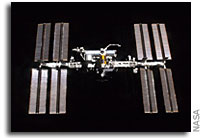
All ISS systems continue to function nominally, except those noted previously or below.
FE-4 Sergei Volkov performed the routine checkup of the SM (Service Module) PSS Caution & Warning panel as part of the regular Daily Morning Inspection.
After wake-up, body samples for the JAXA experiment MYCO (Mycological Evaluation of Crew Exposure to ISS Ambient Air) were collected by FE-5 Furukawa from himself and CDR Fossum, then inserted into the GLACIER (General Laboratory Active Cryogenic ISS Experiment Refrigerator) freezer for preservation. [MYCO evaluates the risk of microorganisms via inhalation and adhesion to the skin to determine which fungi act as allergens on the ISS. MYCO samples are collected from the nasal cavity, the pharynx and the skin of crew during preflight, in flight and postflight focusing particularly on fungi which act as strong allergens in our living environment. Before sample collection, crewmembers are not to eat or drink anything except water, nor wash their face, brush their teeth, or gargle after you wake up to avoid science loss.]
In the SM, Volkov copied the TEKh-39 LCS (Laser Communications System, Russian: SLS) test data collected overnight from the RSE-SLS A31p laptop to the RSS2 laptop for data downlink.
CDR Fossum serviced the running BCAT-5 (Binary Colloidal Alloy Test-5) experiment, checking camera operations and changing the camera battery in the morning and before sleeptime (change required after 8 hrs). [The new experiment run is with a Harvard University phase separation sample using a different setup than for the recent crystal samples 9 & 10, mainly requiring an SSC laptop with EarthKAM timing software, power cables and camera USB cable. For illumination, the Mini-MagLite and Flash batteries do not need to be changed yet, but the camera will need a freshly charged battery. After Mike mixed the sample (#4) for phase separation and took test photos, the EarthKAM software on the SSC-13 laptop began taking pictures of Sample 4 for 13 days at different intervals throughout the run. This requires camera battery changes twice a day and image check with a battery change once per day. BCAT-5 is operating in the JPM (JEM Pressurized Module) because some time ago the crew deemed the US Lab too crowded for running it.]
FE-4 continued the periodic inspection and photo-documentation of window panes in the SM and DC1 Docking Compartment for which he had made preparations yesterday. The observed defects were recorded in image and text files on the RSK1 laptop for subsequent downlink via U.S. OCA assets. [Objective of the inspection, which uses a digital still camera (Nikon D2X w/SB-28DX flash) and voice recorder, today was to assess the pane surfaces on SM windows 2, 13, 14 and VL1 in DC1 for any changes (new cavities, scratches, new or expanded old stains or discolorations affecting transparency properties) since the last inspection. The new assessment will be compared to the earlier observations. Defects are measured with the parallax method which uses eyeball-sighting with a ruler and a right isosceles triangle to determine the defects’ size and position with respect to the window’s internal surface (parallax being the apparent change in an object’s position resulting from changing the observer’s position).]
In the US Lab, after installing the three CIR (Combustion Integrated Rack) alignment guides to protect it from external loading (dynamic disturbances) and setting up the video equipment for a live ground view of his activities, CDR Fossum worked on CIR to set it up for more ground-commanded MDCA (Multi-user Drop Combustion Apparatus) test point activities. [Mike first opened the FCF (Fluids & Combustion Facility) upper door, removed the MDCA Fuel Reservoir in Location 1, replaced it with Fuel Reservoir #2012, then placed the manual vent valve in ISS VENT position and the GIP valve lever in Up (open) position). After closing the FCF lower & upper rack door, Mike turned on two switches and notified POIC (Payload Operations & Integration Center) of payload readiness for ground commanding.]
FE-5 Furukawa set up the G1 video camcorder and MPC (Multi-Protocol Converter), gathered the necessary equipment, then conducted the JAXA EPO (Education Payload Operation) “Try Zero-G” demo experiment, taking video imagery. Later, the footage was downlinked via MPC.
In a second EPO activity, Satoshi set up the camcorder equipment and, with Mike joining in, recorded a narrative describing Robonaut 2 and its purpose on ISS. [The demo was timed such that EPO ground personnel could watch, for providing real-time feedback during the demo. The high-definition G1 camcorder tape was played back via the MPC. ]
FE-4 Volkov performed the daily inspection of the recently activated Russian BIO-5 Rasteniya-2 (“Plants-2”) payload with its LADA-01 greenhouse, verifying proper watering of the KM A32 & A24 root modules and taking the weekly documentary photography of setup & activities. [Rasteniya-2 researches growth and development of plants (currently wheat) under spaceflight conditions in the LADA greenhouse from IBMP (Institute of Bio-Medical Problems, Russian: IMBP).]
The CDR built another EDV-U urine container from components (lid & body) and then emptied the WSTA (Wastewater Storage Tank Assembly) in it, in preparation for tomorrow’s removal & replacement of the UPA FCPA (Urine Processor Assembly / Fluid Control Pump Assembly).
Sergei conducted the routine daily servicing of the SOZh system (Environment Control & Life Support System, ECLSS) in the SM. [Regular daily SOZh maintenance consists, among else, of checking the ASU toilet facilities, replacement of the KTO & KBO solid waste containers, replacement of EDV-SV waste water and EDV-U urine containers and filling EDV-SV, KOV (for Elektron), EDV-ZV & EDV on RP flow regulator.]
Working from the Russian discretionary “time permitting” task list, FE-4 also completed the daily IMS (Inventory Management System) maintenance, updating/editing its standard “delta file” including stowage locations, for the regular weekly automated export/import to its three databases on the ground (Houston, Moscow, Baikonur).
FE-5 performed the regular 30-day inspection of the AED (Automated External Defibrillator) in the CHeCS rack. [AED is a portable electronic device that automatically diagnoses the potentially life threatening cardiac arrhythmias of ventricular fibrillation and ventricular tachycardia in a patient. It then can treat them through defibrillation, i.e., the application of electrical therapy which stops the arrhythmia, allowing the heart to re-establish an effective rhythm.]
Afterwards, Satoshi serviced the VIABLE (eValuatIon And monitoring of microBiofiLms insidE the ISS) experiment, first reconfiguring bag placement for a minimum-width locker in the FGB, then touching and blowing the top of each of 4 VIABLE bags. [The bags are stowed in the FGB (loc.409) to collect environment samples. The reconfiguration was to ensure that the bags have the required spacing between them.]
Sergei completed his 2nd data collection session for the psychological MBI-16 Vzaimodejstvie (“Interactions”) program, accessing and completing the computerized study questionnaire on the RSE-Med laptop and saving the data in an encrypted file. [The software has a “mood” questionnaire, a “group & work environment” questionnaire, and a “critical incidents” log. Results from the study, which is also mirrored by ground control subjects, could help to improve the ability of future crewmembers to interact safely and effectively with each other and with Mission Control, to have a more positive experience in space during multi-cultural, long-duration missions, and to successfully accomplish mission activities.]
At ~8:40am, Mike Fossum conducted his regular IMS stowage conference with Houston stowage specialists.
At ~1:00pm, Sergei Volkov is scheduled for linking up with TsUP stowage specialists via S-band to conduct the weekly IMS tagup, discussing inventory & stowage issues, equipment locations and cargo transfers.
At ~2:05pm, Satoshi Furukawa powers up the SM’s amateur radio equipment (Kenwood VHF transceiver with manual frequency selection, headset, & power supply) and at 2:10pm conducts a ham radio session with students at Kiroli Elementary School in West Monroe, Louisiana.
Before “Presleep” period tonight, the CDR turns on the MPC and starts the data flow of video recorded during the day to the ground, with POIC (Payload Operations & Integration Center) routing the onboard HRDL (High-Rate Data Link). After about an hour, Mike will turn MPC off again. [This is a routine operation which regularly transmits HD onboard video (live or tape playback) to the ground on a daily basis before sleeptime.]
A task listed for Sergei on the Russian discretionary “time permitting” job for today continues to be the preparation & downlinking of more reportages (written text, photos, videos) for the Roskosmos website to promote Russia’s manned space program (max. file size 500 Mb).
Mike & Satoshi performed their 3rd session each of the new Treadmill Kinematics program on the T2/COLBERT treadmill, setting up the HD camcorder in Node-1, placing tape markers on their body, recording a calibration card in the FOV (Field of View) and then conducting the workout run within a specified speed range. [Purpose of the Kinematics T2 experiment is to collect quantitative data by motion capture from which to assess current exercise prescriptions for participating ISS crewmembers. Detailed biomechanical analyses of locomotion will be used to determine if biomechanics differ between normal and microgravity environments and to determine how combinations of external loads and exercise speed influence joint loading during in-flight treadmill exercise. Such biomechanical analyses will aid in understanding potential differences in gait motion and allow for model-based determination of joint & muscle forces during exercise. The data will be used to characterize differences in specific bone and muscle loading during locomotion in the two gravitational conditions. By understanding these mechanisms, appropriate exercise prescriptions can be developed that address deficiencies.]
The crew worked out with their regular 2-hr physical exercise protocol on the TVIS treadmill with vibration isolation & stabilization (FE-4), ARED advanced resistive exercise device (CDR, FE-5), T2/COLBERT advanced treadmill (CDR, FE-5), and VELO ergometer bike with load trainer (FE-4).
MDM Issue: Yesterday during MSRR (Material Science Research Rack) activation, the primary PL MDM-1 (Payload Multiplexer/Demultiplexer) computer unexpectedly failed, switching to Diagnostic State. The ground configured PL MDM-2 as primary PL MDM [essentially by renaming iAPS (improved Automated Payload Switch) files], and MDM-2 is currently successfully supporting payload ops. Preliminary analysis indicates that the computer failure was caused by a task overrun which occurred when the MSRR was added as a 7th LRT (Low Rate Telemetry) user. PL MDM-1 has meanwhile been checked out OK and is being used as backup for PL MDM-2.
WRM Update: A new WRM (Water Recovery Management) “cue card” was uplinked to the crew for their reference, updated with their latest CWC (Contingency Water Container) water audit. [The new card (29-0002A) lists 117 good CWCs (2,698.8 L total) for the five types of water identified on board: 1. technical water (30 CWCs with 1,249.2 L, for Elektron electrolysis, incl. 942.9 L in 24 bags containing Wautersia bacteria and 129 L in 3 clean bags for contingency use; 2. Silver potable water (no CWCs); 3. Iodinated water (74 CWCs with 1,333.6 L (also 33 expired bags with 603.2 L); 4. condensate water (79.3 L in 7 bags, plus 4 empty bags); and 5. waste/EMU dump and other (37.0 L in 2 CWCs, incl. 20.2 L from hose/pump flush). Wautersia bacteria are typical water-borne microorganisms that have been seen previously in ISS water sources. These isolates pose no threat to human health.]
JAXA Marangoni Experiment: The crew was advised of another Marangoni bridge building event tonight (7:00pm-1:00am), the 4th in 24 planned bridge buildings in Increment 29/30. The experiment is performed in the Kibo JPM during crew sleep (since the liquid bridge to be formed is sensitive to g-jitter), 4 days/week at most and 24 runs in total. After the liquid bridge has been formed, the ground imposes a temperature gradient on it to produce Marangoni convection. The crew, which will be informed regularly, has been asked to avoid any disturbances in this timeframe. Even disturbances in other modules can be transmitted and cause the liquid bridge in JPM to break up, resulting in science loss.
CEO (Crew Earth Observation) targets uplinked for today were Dili, East Timor (Timore Leste) (the capital city of East Timor with a population of almost 200,000 is located on the north coast of eastern Timor Island. ISS had a nadir pass, mostly clear weather was expected. Looking for this urban area on the north coast, just opposite the smaller island of Atauro), Kiev, Ukraine (ISS had a descending pass near this capital city of Ukraine [looking left of track] with a population of 2.6 million. Fair weather was expected with a possibility of a few clouds. The city is located on the Dnieper River, just south of the Kiev Reservoir. Trying to capture the entire city in the CEO images), Munich, Germany (as per ESA request for this capital city in the state of Bavaria. Looking right of track towards the center of the oldest part of this city of 1.4 million to capture Oktoberfest activities), Mt. Etna, Sicily (Mount Etna is currently classified as having new activity. Recently Etna has been going through a small eruptive phase whereby ash plumes have been observed to occur as frequently as every 5 – 15 minutes. CEO observers are interested in any plume event; the crew was to try to capture the source and extent of any plume. ISS had a nadir pass over the volcano), Lisbon, Portugal (looking left for the great estuary of the Tagus River. Greater Lisbon appears as the gray zone on either side of the estuary. The city center lies nearer track at the narrow, coastal end of the estuary. Bridges over the estuary may be visible), and Tropical Storm Ophelia, Atlantic Ocean (Dynamic Event: Tropical Storm Ophelia developed in the far eastern Atlantic Ocean and became the 15th named tropical cyclone of the season late on 9/20. The National Hurricane Center is forecasting only slow development of this system as in moves westward at about 14kts. By the time of the ISS pass today it was forecast to have 45kt winds. As ISS tracked southeastward over the open Atlantic east of the Lesser Antilles, the crew was to shoot obliquely left of track for views of young tropical cyclone).
ISS Orbit (as of this morning, 9:25am EDT [= epoch])
* Mean altitude – 383.6 km
* Apogee height – 390.9 km
* Perigee height – 376.4 km
* Period — 92.23 min.
* Inclination (to Equator) — 51.64 deg
* Eccentricity — 0.0010681
* Solar Beta Angle — -25.9 deg (magnitude decreasing)
* Orbits per 24-hr. day — 15.61
* Mean altitude loss in the last 24 hours — 147 m
* Revolutions since FGB/Zarya launch (Nov. 98) — 73,611
* Time in orbit (station) — 4689 days
* Time in orbit (crews, cum.) — 3976 days
Significant Events Ahead (all dates Eastern Time and subject to change):
————–Three-crew operations (Increment 29)————-
10/05/11 — ISS Reboost
10/29/11 — Progress M-10M/42P undocking
10/30/11 — Progress M-13M/45P launch
11/01/11 — Progress M-13M/45P docking
11/14/11 — Soyuz TMA-03M/28S launch – D.Burbank (CDR-30)/A.Shkaplerov/A.Ivanishin
11/16/11 — Soyuz TMA-03M/28S docking (MRM2)
————–Six-crew operations————-
11/22/11 — Soyuz TMA-02M/27S undock/landing (End of Increment 29)
————–Three-crew operations————-
11/30/11 — SpaceX Falcon 9/Dragon — Target date
12/26/11 — Soyuz TMA-04M/29S launch – O.Kononenko (CDR-31)/A.Kuipers/D.Pettit — (date “on or about”)
12/28/11 — Soyuz TMA-04M/29S docking (MRM1) — (date “on or about”)
————–Six-crew operations—————-
TBD — Progress M-13M/45P undock
TBD — Progress M-14M/46P launch
TBD — Progress M-14M/46P docking (DC-1)
02/29/12 — ATV3 launch readiness
TBD — Soyuz TMA-03M/28S undock/landing (End of Increment 30)
————–Three-crew operations————-
03/30/12 — Soyuz TMA-05M/30S launch – G.Padalka (CDR-32)/J.Acaba/K.Volkov
04/01/12 — Soyuz TMA-05M/30S docking (MRM2)
————–Six-crew operations—————-
05/05/12 — 3R Multipurpose Laboratory Module (MLM) w/ERA – launch on Proton (under review)
05/06/12 — Progress M-14M/46P undock
05/07/12 — 3R Multipurpose Laboratory Module (MLM) – docking (under review)
05/16/12 — Soyuz TMA-04M/29S undock/landing (End of Increment 31)
————–Three-crew operations————-
05/29/12 – Soyuz TMA-06M/31S launch – S.Williams (CDR-33)/Y.Malenchenko/A.Hoshide
05/31/12 – Soyuz TMA-06M/31S docking
————–Six-crew operations—————-
09/18/12 — Soyuz TMA-05M/30S undock/landing (End of Increment 32)
————–Three-crew operations————-
10/02/12 — Soyuz TMA-07M/32S launch – K.Ford (CDR-34)/O.Novitskiy/E.Tarelkin
10/04/12 – Soyuz TMA-07M/32S docking
————–Six-crew operations————-
11/16/12 — Soyuz TMA-06M/31S undock/landing (End of Increment 33)
————–Three-crew operations————-
11/30/12 — Soyuz TMA-08M/33S launch – C.Hadfield (CDR-35)/T.Mashburn/R.Romanenko
12/02/12 – Soyuz TMA-08M/33S docking
————–Six-crew operations————-
03/xx/13 — Soyuz TMA-07M/32S undock/landing (End of Increment 34)
————–Three-crew operations————-
03/xx/13 – Soyuz TMA-09M/34S launch – P.Vinogradov (CDR-36)/C.Cassidy/A.Misurkin
03/xx/13 – Soyuz TMA-09M/34S docking
————–Six-crew operations————-
05/xx/13 – Soyuz TMA-08M/33S undock/landing (End of Increment 35)
————–Three-crew operations————-
05/xx/13 – Soyuz TMA-10M/35S launch – M.Suraev (CDR-37)/K.Nyberg/L.Parmitano
05/xx/13 – Soyuz TMA-10M/35S docking
————–Six-crew operations————-
09/xx/13 – Soyuz TMA-09M/34S undock/landing (End of Increment 36)
————–Three-crew operations————-
09/xx/13 – Soyuz TMA-11M/36S launch – M.Hopkins/TBD (CDR-38)/TBD
09/xx/13 – Soyuz TMA-11M/36S docking
————–Six-crew operations————-
11/xx/13 – Soyuz TMA-10M/35S undock/landing (End of Increment 37)
————–Three-crew operations————-
11/xx/13 – Soyuz TMA-12M/37S launch – K.Wakata (CDR-39)/R.Mastracchio/TBD
11/xx/13 – Soyuz TMA-12M/37S docking
————–Six-crew operations————-
03/xx/14 – Soyuz TMA-11M/36S undock/landing (End of Increment 38)
————–Three-crew operations————-



