
NASA ISS On-Orbit Status 9 August 2011
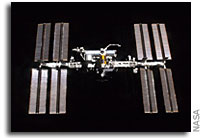
All ISS systems continue to function nominally, except those noted previously or below.
As part of the regular Daily Morning Inspection, FE-4 Volkov checked out the SM (Service Module) PSS caution & warning panel.
As his first activity of the day, FE-5 Furukawa conducted Part 2 of the periodic personal acoustic measurement protocol, distributing crew-worn acoustic dosimeters from the SMK (Sound Measurement Kit) to the Increment 28 crew, i.e., Sergei (#1011), Mike (#1013) & himself (#2012) for a 24-hr data take.
At wake-up, FE-3 Garan, FE-4 Furukawa & FE-6 Fossum completed another post-sleep shift session of the Reaction Self Test (Psychomotor Vigilance Self Test on the ISS) protocol. [RST is done twice daily (after wakeup & before bedtime) for 3 days prior to the sleep shift, the day(s) of the sleep shift and 5 days following a sleep shift. The experiment consists of a 5-minute reaction time task that allows crewmembers to monitor the daily effects of fatigue on performance while on ISS. The experiment provides objective feedback on neurobehavioral changes in attention, psychomotor speed, state stability, and impulsivity while on ISS missions, particularly as they relate to changes in circadian rhythms, sleep restrictions, and extended work shifts.]
Also at wake-up, FE-1 Samokutyayev terminated his 4th experiment session, started last night, for the long-term Russian sleep study MBI-12/Sonokard, taking the recording device from his Sonokard sports shirt pocket and later copying the measurements to the RSE-Med laptop for subsequent downlink to the ground. [Sonokard objectives are stated to (1) study the feasibility of obtaining the maximum of data through computer processing of records obtained overnight, (2) systematically record the crewmember’s physiological functions during sleep, (3) study the feasibility of obtaining real-time crew health data. Investigators believe that contactless acquisition of cardiorespiratory data over the night period could serve as a basis for developing efficient criteria for evaluating and predicting adaptive capability of human body in long-duration space flight.]
Afterwards, FE-1 took his 4th MBI-24 “SPRUT-2” (“Squid-2”) test, part of Russian medical research on the distribution and behavior of human body fluids in zero gravity, along with PZEh-MO-8 body mass measurement using the IM device. [Supported by the RSS-Med A31p laptop with new software (Vers. 1.6) in the SM, the test uses the Profilaktika kit, with data recorded on PCMCIA memory cards, along with Dima’s body mass values and earlier recorded MO-10 Hematocrit value, but skipping “fat fold” measurements. Experiment requisites are the Sprut securing harness, skin electrodes (cuffs), and RSS-Med for control and data storage. The “Pinguin” suit or Braslet-M cuffs, if worn, have to be taken off first. Electrode measurements are recorded at complete rest and relaxed body position. The actual recording takes 3-5 minutes, during which the patient has to remain at complete rest.]
After wakeup, Sergei Volkov conducted the routine verification of yesterday’s refreshes of the IUS AntiVirus program on all Russian VKS auxiliary network laptops RSS1, RSS2, RSK1-T61p & RSK2. [Antivirus update procedures have changed since the recent SSCV4 software update. Until a new automated procedure has been cleared for use, the refresh is done manually on Mondays on RSS2, copying the files to the RSS2 service folder, then launching update scripts on the network laptops RSS1, RSK1-T61p & RSK2 and finally manually updating non-network laptops RSE-Med & RSE1. On Tuesdays, the anti-virus scanning will be verified on all laptops. Nominally, Russian network laptops have software installed for automatic anti-virus update; fresh data is copied on RSK1-T61p & RRSK2 every time a computer is rebooted with a special login, and on RSS1 once daily. On Russian non-network laptops antivirus definition file update is done by the crew once every two weeks on Monday.]
Later, Volkov completed his 3rd session with the Russian behavioral assessment TIPOLOGIA (MBI-20), setting up the workstation, connecting equipment, suiting up and launching the program on the RSK1 laptop. [Andrey Borisenko assisted Sergei in donning the electrode cap, preparing the head for the electrodes, applying electrode gel from the Neurolab-RM2 kit and taking documentary photography. Data were recorded on a PCMCIA memory card and downlinked via OCA comm. MBI-20 studies typological features of operator activity of the ISS crews in long-term space flight phases, with the subject using a cap with EEG (electroencephalogram) electrodes. The experiment, which records EEGs, consists of the Lüscher test, “adaptive biological control” training, and the games Minesweeper and Tetris. The Lüscher color diagnostic is a psychological test which measures a person’s psychophysical state, his/her ability to withstand stress, to perform and to communicate. It is believed to help uncover the cause of psychological stress, which can lead to physical symptoms. An EEG measures and records the electrical activity of the brain.]
Volkov also started a new session of the standard 24-hour ECG (electrocardiogram) recording under the Russian MedOps PZE MO-2-1 protocol which monitors human cardiovascular performance in the space flight environment. [After 24 hrs of ECG recording and blood pressure measurements with the Kardiomed (CDM) system, Sergei will doff the five-electrode Holter harness that read his dynamic (in motion) heart function from two leads and recorded on the “Kardioregistrator 90205” unit. The examination results will then be downloaded from the Holter ECG device to the RSE-Med laptop, controlled by the Kardiomed application. Later, the data will be downlinked as a compressed .zip-file via OCA.]
FE-3 Garan began his latest HRF (Human Research Facility) generic 24-hr urine collection period, with samples deposited in MELFI (Minus Eighty Laboratory Freezer for ISS). [The operational products for blood & urine collections for the HRP (Human Research Program) payloads were revised some time ago, based on crew feedback, new cold stowage hardware, and IPV capabilities. Generic blood & urine procedures have been created to allow an individual crewmember to select their payload complement and see specific requirements populated. Individual crewmembers will select their specific parameter in the procedures to reflect their science complement. Different crewmembers will have different required tubes and hardware configurations, so they must verify their choice selection before continuing with operations to ensure their specific instruction.]
FE-5 Furukawa opened the protective window shutters of the Lab WORF (Window Observational Research Facility) for the ISSAC (ISS Agriculture Camera) equipment, so ground images can be captured by ground commanding. At sleeptime tonight, Satoshi will close the shutters again. [ISSAC takes frequent visible-light & infrared images of vegetated areas on the Earth. The camera focuses principally on rangelands, grasslands, forests, and wetlands in the northern Great Plains and Rocky Mountain regions of the United States. The images may be delivered directly upon request to farmers, ranchers, foresters, natural resource managers and tribal officials to help improve their environmental stewardship of the land. The images will also be shared with educators for classroom use.]
Later, Furukawa performed the weekly O2 (oxygen) check in SM and COL (Columbus Orbital Laboratory), using two CSA-O2 (Compound Specific Analyzer C Oxygen) units from the Lab P4 rack location to take readings in mid-module. [O2 values, battery ticks of each monitor and GMT time of activity were then reported to MCC-Houston. The CSA-O2 devices are used to help track O2 concentration while the MCA (Major Constituents Analyzer) is down.]
CDR Borisenko & FE-4 Volkov (as handover), conducted the periodic (monthly) functional closure test of the Vozdukh CO2 (carbon dioxide) removal system’s spare AVK emergency vacuum valves, in the spare parts kit. [The AVKs are crucial because they close the Vozdukh’s vacuum access lines in the event of a malfunction in the regular vacuum valves (BVK) or a depressurization in the Vozdukh valve panel (BOA). Access to vacuum is required to vent CO2 during the regeneration of the absorbent cartridges (PP).]
Andrey also inspected the newly activated Russian BIO-5 Rasteniya-2 (“Plants-2”) payload with its LADA-01 greenhouse, checking for proper fan operation by testing the air flow from the ventilators BO A04 & BO A05 and verifying that both LEDs (Light Emitting Diodes) are lit. [Rasteniya-2 researches growth and development of plants (currently wheat) under spaceflight conditions in the LADA greenhouse from IBMP (Institute of Bio-Medical Problems, Russian: IMBP).]
In COL, Ronald Garan performed another onboard science session with the ESA PASSAGES experiment, his last, after setting up the VCA1 (Video Camera Assembly 1) to cover the activities, operating the experiment from the EPM (European Physiology Module) laptop. Afterwards, the PASSAGES PCMCIA (Portable Computer Memory Card International Adapter) memory card was inserted into the EPM laptop for downlinking. [After installing the experiment equipment (NeuroSpat light shield, trackball) on the MPL (Multipurpose Laptop) in front of the EPM, Ron conducted a session of the science data collection as subject (no glasses allowed). FE-3 later stowed the equipment. The objective of the PASSAGES experiment is to study the effect of the absence of gravity on a body-related action such as the passage through a restricted opening. Participants estimate the “passability” in making verbal judgments as to whether they can fit through a doorway depicted in a virtual reality environment (by responding to “Yes/No” questions). Through this experiment, our aim is to better understand how astronauts must adjust perceptual strategies in order to efficiently perform simple tasks (such as passing through an open doorway). This experiment tests a fundamental hypothesis about human perception while at the same time helping researchers to understand how astronauts adjust to the novel conditions of space flight. These experiments may lead to training paradigms using virtual reality that could be used to better prepare astronauts for space. The first onboard run was performed by Paolo Nespoli on 1/3.]
Later, Garan & Fossum had ~2 hrs set aside each to continue the stowage of US EVA tools used by Sasha & Sergei in the recent Russian EVA-29 and by Ron & Mike on the earlier ULF7 spacewalk.
After Mike Fossum had closed the TOCA VCA (Total Organic Carbon Analyzer / Volume Compensation Assembly) valve (to 49%) for recovery from sample analysis failure, Satoshi Furukawa performed the periodic (approx. weekly) WRS sampling in Node-3 using TOCA, after first initializing the software and priming (filling) the TOCA water sample hose, followed by the periodic changeout of the TOCA WWB (Waste Water Bag). [After the approximately 2 hr TOCA analysis, results were transferred to the SSC-5 (Station Support Computer 5) laptop via USB drive for downlink, and the data were also logged.]
Later in the day, Satoshi had ~3 hrs for major IFM (In-Flight Maintenance) on the VCAM (Vehicle Cabin Atmosphere Module) cabling for which he had set up tools & equipment yesterday. [FE-5 installed a new jumper cable to activate the secondary heater leg of VCAM and also cleaned the inlet filter screen while VCAM was out of the rack. Before starting work, a check with POIC (Payload Operations Integration Center) had to confirm that the VCAM’s Turbomolecular Pump had spun down.]
Satoshi went on a search to retrieve the oil lens for the LMM (Light Microscopy Module) for temporary stowage in preparation for tomorrow’s scheduled PACE (Preliminary Advanced Colloids Experiment) payload operations in the FIR FCF (Fluids Integrated Rack Fluids & Combustion Facility). [PACE is a technology experiment, designed to investigate the capability of conducting high magnification colloid experiments with the LMM for determining the minimum size particles which can be resolved.]
In Node-3, Mike worked several hours in the WHC (Waste & Hygiene Compartment), assembling the new UMS (Urine Monitoring System), validating its performance and taking validation samples. Satoshi floated nearby to take documentary photography/video. [Activities included setting up the Node-3 camcorder to capture cabin video of the UMS work, retrieving an SSC (Station Support Computer) laptop installation and assembling the UMS hardware within the WHC. After UMS activation, Mike was to power on the WHC to check out its hose connections, then deactivate the WHC and UMS. After configuring WHC for the internal EDV-U mode from backfill to prevent UPA (Urine Processor Assembly) processing for 24 hrs, and setting the UPA T-valve to Off, FE-6 was to retrieve & review instructional cue cards and perform validation activities as prompted by the UMS software on the SSC. Using syringes, Fossum then collected validation samples from the running UMS, stowed them in MELFI-1 and deactivated all systems.]
In the RS (Russian Segment), Andrey Borisenko performed a comprehensive audit & checkout of cables plugged into the various STTS communications panels (with push-to-talk button on their other end). [There are six comm panels in the SM, two in the FGB (one in the PGO, the other in the GA sections), and one each in DC-1 Pirs, MRM1 Rassvet and MRM2 Poisk modules.]
Afterwards, Andrey checked out proper communications between the BSPN Payload Server and the RSS1 laptop, and then downloaded data accumulated from the GFI-7 Molniya-GAMMA experiment mounted externally since the Russian EVA-28. [GFI-17 “Molniya” FOTON-GAMMA investigates atmospheric gamma-ray bursts and optical radiation in conditions of thunderstorm activity.]
Later, the CDR performed the periodic condition assessment of loops KOB1 & KOB2 of the Russian SOTR Thermal Control System, checking for leaks, monitoring loop parameter signatures, setting working pressures, and measuring the free air volume in both thermal loops.
After the overnight battery charging, Borisenko installed and started the equipment of the GFI-1 “Relaksatsiya” (Relaxation) Earth Observation experiment at SM window #9 for another run, using it to observe & measure lightning storm emissions in the Earth’s upper atmosphere. Later, the equipment was dismantled again and the data dumped via the RSS1 terminal. [Using the GFI-1 UFK “Fialka-MV-Kosmos” ultraviolet camera, SP spectrometer and SONY HVR-Z7 HD (High Definition) camcorder, the experiment observes the Earth atmosphere and surface from window #9, with spectrometer measurements controlled from Laptop 3. “Relaxation”, in Physics, is the transition of an atom or molecule from a higher energy level to a lower one, emitting radiative energy in the process as equilibrium is achieved.]
Samokutyayev & Borisenko finished re-integrating the Progress M-10M/42P (#410), docked at the DC-1 Docking Compartment, with the ISS by dismantling the docking mechanism (StM, Stykovochnovo mekhanizma) between the cargo ship and the DC-1, and installing the regular two handles on its external hatch cover. [StM is the “classic” probe-and-cone type, consisting of an active docking assembly (ASA) with a probe (SSh), which fits into the cone (SK) on the passive docking assembly (PSA) for initial soft dock and subsequent retraction to hard dock. The ASA is mounted on the Progress’ cargo module (GrO), while the PSA sits on the docking ports of the SM, FGB and DC-1].
Afterwards, Sasha had ~3 hrs set aside for unloading Progress 42P and transferring US freight items to the USOS (US Segment) where Satoshi took over, unpacking and stowing the cargo. Transactions were documented with the BCR (Bar Code Reader) in the IMS (Inventory Management System) database.
Sergei Volkov meanwhile worked on Progress M-11M/43P, docked at SM aft end, loading it with waste & excessed hardware for disposal and keeping track in IMS. [43P is scheduled for undocking on 8/29.]
With the Russian Elektron oxygen generator currently inactive, Volkov was to initiate a refresh of the ISS interior with an O2 repress from Progress 43P tankage on Go-ahead from TsUP-Moscow.
Sergei also handled the daily IMS maintenance, updating/editing its standard “delta file” including stowage locations, for the regular weekly automated export/import to its three databases on the ground (Houston, Moscow, Baikonur).
Sasha conducted the routine daily servicing of the SOZh system (Environment Control & Life Support System, ECLSS) in the SM. [Regular daily SOZh maintenance consists, among else, of checking the ASU toilet facilities, replacement of the KTO & KBO solid waste containers, replacement of EDV-SV waste water and EDV-U urine containers and filling EDV-SV, KOV (for Elektron), EDV-ZV & EDV on RP flow regulator.]
Before sleeptime, Samokutyayev is to initiate overnight (10-hr) charging of the KPT-2 Piren battery for the Piren-V Pyro-endoscope, part of the Russian BAR science instruments suite (other BAR components being the ТТМ-2 Anemometer-Thermometer, the charger cable, and the video display unit). [Piren-V, a video-endoscope with pyrosensor, is part of the methods & means being used on ISS for detecting tiny leaks in ISS modules which could lead to cabin depressurization. Objective of the Russian KPT-12/EXPERT science payload is to measure environmental parameters (temperature, humidity, air flow rate) and module shell surface temperatures behind SM panels and other areas susceptible to possible micro-destruction (corrosion), before and after insolation (day vs. night). Besides Piren-V, the payload uses a remote infrared thermometer (Kelvin-Video), a thermohygrometer (Iva-6A), a heat-loss thermoanemometer/thermometer (TTM-2) and an ultrasound analyzer (AU) to determine environmental data in specific locations and at specific times. Activities include documentary photography with the NIKON D2X camera and flash.]
Before “Presleep” period tonight, Ron Garan powers on the MPC (Multi-Protocol Converter) and starts the data flow of video recorded during the day to the ground, with POIC (Payload Operations & Integration Center) routing the onboard HRDL (High-Rate Data Link). After about an hour, MPC will be turned off again. [This is a routine operation which regularly transmits HD onboard video (live or tape playback) to the ground on a daily basis before sleeptime.]
CDR, FE-1 & FE-3 were scheduled for their standard PMCs via S- & Ku-band audio/video, Andrey at ~9:55am, Sasha at ~2:25pm, Sergei at ~2:40pm EDT.
At ~12:55pm, Ron & Mike supported a PAO educational TV event, responding to questions from The Boy Scouts of America C Northern Star Council, Northern Star Council Base Camp, St. Paul, MN.
The crew worked out with their regular 2-hr physical exercise protocol on the CEVIS cycle ergometer with vibration isolation (FE-3, FE-5), TVIS treadmill with vibration isolation & stabilization (CDR, FE-1, FE-4), ARED advanced resistive exercise device (CDR, FE-3, FE-5, FE-6), T2/COLBERT advanced treadmill (FE-6) and VELO ergometer bike with load trainer (FE-1, FE-4).
CEO (Crew Earth Observation) targets uplinked for today were Aurora Borealis, NW North America (DYNAMIC EVENT: The crew had a total of 5 opportunities today to view this striking upper atmospheric phenomenon. The NOAA Space Weather Prediction Center suggested that statistically the strongest Auroral activity in the Northern Hemisphere will be found over the polar regions from the longitudes of 90E [central Asia] to 90W [central North America]).
ISS Orbit (as of this morning, 9:55am EDT [= epoch])
Mean altitude C 386.7 km
Apogee height C 395.4 km
Perigee height C 378.0 km
Period — 92.29 min.
Inclination (to Equator) — 51.64 deg
Eccentricity — 0.0012792
Solar Beta Angle — 57.8 deg (magnitude increasing)
Orbits per 24-hr. day — 15.60
Mean altitude loss in the last 24 hours — 52 m
Revolutions since FGB/Zarya launch (Nov. 98) C 72,924
Significant Events Ahead (all dates Eastern Time and subject to change):
————–Six-crew operations————-
08/29/11 — Progress M-11M/43P undocking
08/30/11 — Progress M-12M/44P launch
09/01/11 — Progress M-12M/44P docking (SM aft)
09/08/11 — Soyuz TMA-21/26S undock/landing (End of Increment 28)
————–Three-crew operations————-
09/22/11 — Soyuz TMA-03M/28S launch C D.Burbank (CDR-30)/A.Shkaplerov/A.Ivanishin
09/24/11 — Soyuz TMA-03M/28S docking (MRM2)
————–Six-crew operations————-
10/25/11 — Progress M-10M/42P undocking
10/26/11 — Progress M-13M/45P launch
10/28/11 — Progress M-13M/45P docking (DC-1)
11/16/11 — Soyuz TMA-02M/27S undock/landing (End of Increment 29)
————–Three-crew operations————-
11/30/11 — Soyuz TMA-04M/29S launch C O.Kononenko (CDR-31)/A.Kuipers/D.Pettit
12/02/11 — Soyuz TMA-04M/29S docking (MRM1)
————–Six-crew operations—————-
12/26/11 — Progress M-13M/45P undock
12/27/11 — Progress M-14M/46P launch
12/29/11 — Progress M-14M/46P docking (DC-1)
02/29/12 — ATV3 launch readiness
03/05/12 — Progress M-12M/44P undock
03/16/12 — Soyuz TMA-03M/28S undock/landing (End of Increment 30)
————–Three-crew operations————-
03/30/12 — Soyuz TMA-05M/30S launch C G.Padalka (CDR-32)/J.Acaba/K.Volkov
04/01/12 — Soyuz TMA-05M/30S docking (MRM2)
————–Six-crew operations—————-
05/05/12 — 3R Multipurpose Laboratory Module (MLM) w/ERA C launch on Proton (under review)
05/06/12 — Progress M-14M/46P undock
05/07/12 — 3R Multipurpose Laboratory Module (MLM) C docking (under review)
05/16/12 — Soyuz TMA-04M/29S undock/landing (End of Increment 31)
————–Three-crew operations————-
05/29/12 C Soyuz TMA-06M/31S launch C S.Williams (CDR-33)/Y.Malenchenko/A.Hoshide
05/31/12 C Soyuz TMA-06M/31S docking
————–Six-crew operations—————-
09/18/12 — Soyuz TMA-05M/30S undock/landing (End of Increment 32)
————–Three-crew operations————-
10/02/12 — Soyuz TMA-07M/32S launch C K.Ford (CDR-34)/O.Novitskiy/E.Tarelkin
10/04/12 C Soyuz TMA-07M/32S docking
————–Six-crew operations————-
11/16/12 — Soyuz TMA-06M/31S undock/landing (End of Increment 33)
————–Three-crew operations————-
11/30/12 — Soyuz TMA-08M/33S launch C C.Hadfield (CDR-35)/T.Mashburn/R.Romanenko
12/02/12 C Soyuz TMA-08M/33S docking
————–Six-crew operations————-
03/xx/13 — Soyuz TMA-07M/32S undock/landing (End of Increment 34)
————–Three-crew operations————-
03/xx/13 C Soyuz TMA-09M/34S launch C P.Vinogradov (CDR-36)/C.Cassidy/A.Misurkin
03/xx/13 C Soyuz TMA-09M/34S docking
————–Six-crew operations————-
05/xx/13 C Soyuz TMA-08M/33S undock/landing (End of Increment 35)
————–Three-crew operations————-
05/xx/13 C Soyuz TMA-10M/35S launch C M.Suraev (CDR-37)/K.Nyberg/L.Parmitano
05/xx/13 C Soyuz TMA-10M/35S docking
————–Six-crew operations————-
09/xx/13 C Soyuz TMA-09M/34S undock/landing (End of Increment 36)
————–Three-crew operations————-
09/xx/13 C Soyuz TMA-11M/36S launch C M.Hopkins/TBD (CDR-38)/TBD
09/xx/13 C Soyuz TMA-11M/36S docking
————–Six-crew operations————-
11/xx/13 C Soyuz TMA-10M/35S undock/landing (End of Increment 37)
————–Three-crew operations————-
11/xx/13 C Soyuz TMA-12M/37S launch C K.Wakata (CDR-39)/R.Mastracchio/TBD
11/xx/13 C Soyuz TMA-12M/37S docking
————–Six-crew operations————-
03/xx/14 C Soyuz TMA-11M/36S undock/landing (End of Increment 38)
————–Three-crew operations————-



